
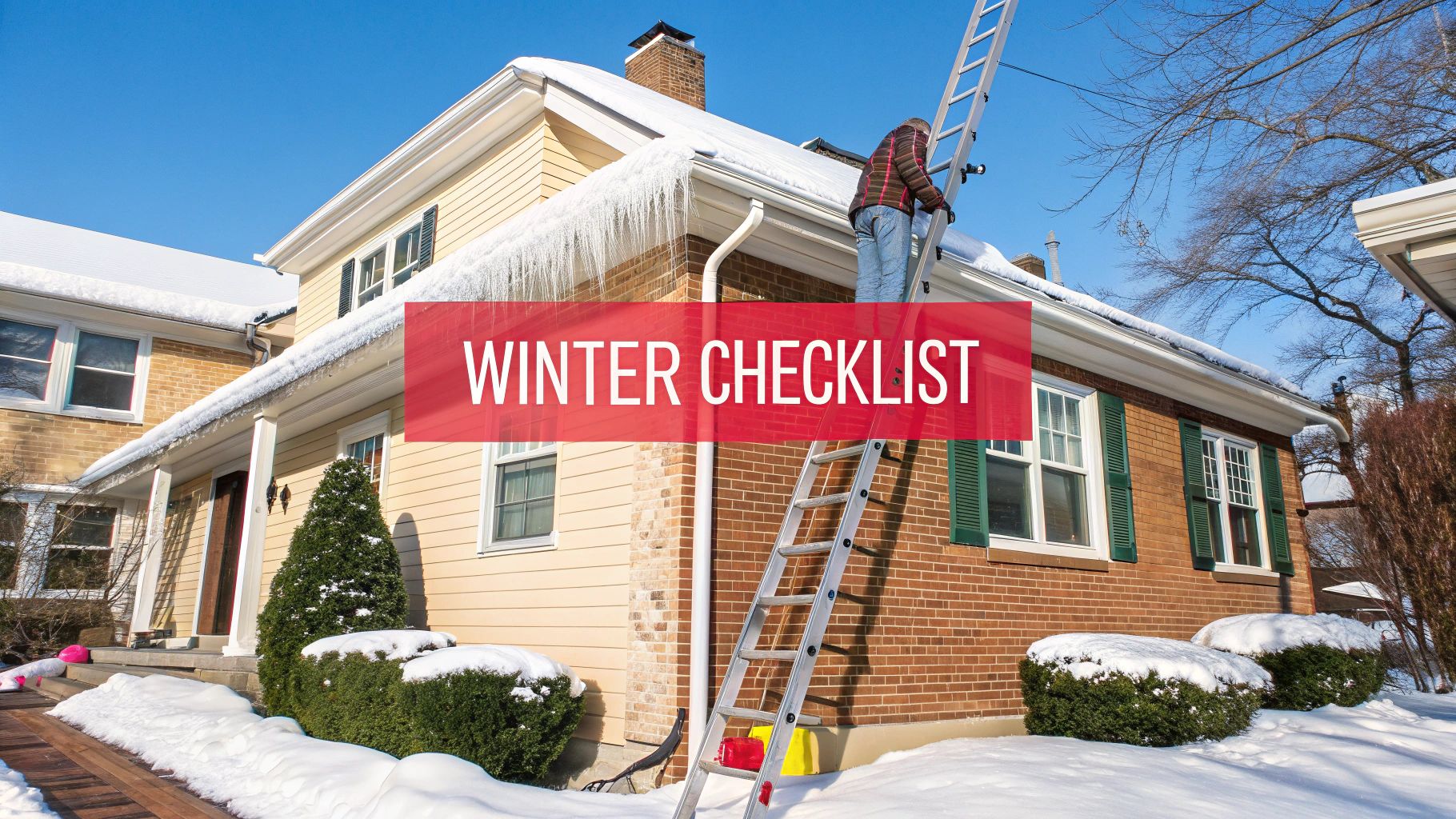
Cleveland winters are no joke — subzero temps, lake-effect snow, and constant freeze-thaw cycles can take a toll on your home. For homeowners in Cleveland, Parma, and Lakewood, preparing for winter is about more than just comfort; it's about preventing catastrophic damage like burst pipes, roof leaks, and costly damage that can quickly derail your finances, especially if you're thinking about selling.
Many older homes, like those found in neighborhoods from Cleveland Heights to Garfield Heights, have unique vulnerabilities that can turn a small oversight into a thousand-dollar repair. This is especially true for homeowners dealing with an inherited property, facing financial hardship, or those considering selling and worried about passing a Point of Sale inspection. Ignoring these issues can lead to significant stress and financial strain.
This comprehensive winter home maintenance Cleveland checklist is your proactive battle plan. It’s designed to help you safeguard your property, save money, and gain peace of mind before the first snowflake falls. We'll walk you through everything you need to fortify your home against the elements with advice tailored to our region's specific challenges.
And if, while going through this checklist, you discover problems that feel too big or too expensive to handle, don’t worry. For some, the cost and effort of major winter repairs aren't feasible. We understand that situation and will also explore a practical, stress-free alternative for those who decide that selling their house as-is is a better path than facing another brutal Cleveland winter full of costly surprises.
Why Winter Home Maintenance Is So Important in Cleveland
Cleveland’s unique winter conditions—heavy lake-effect snow, fluctuating temperatures swinging from mild to freezing, and high humidity—put an incredible strain on our homes. This is especially true for the area’s aging housing stock. In neighborhoods like Lakewood, Cleveland Heights, or Garfield Heights, many homes are 50 to 100 years old, with original plaster walls, older plumbing, and less insulation than their modern counterparts.
For homeowners in these areas, or even in newer suburbs like Lorain or Elyria, what starts as a small issue can quickly become a major disaster. A tiny crack in the foundation can let in moisture that freezes, expands, and widens the gap. A few missing shingles can lead to a roof leak that causes attic mold and ruins ceilings. A furnace that hasn't been serviced could fail during a January polar vortex, leading to frozen pipes that burst and flood your basement.
Ignoring these small issues before winter doesn't just risk your comfort; it risks your home's value and your financial stability. Proactive maintenance is the best defense against the costly, stressful emergencies that Cleveland winters are known for.
Exterior Maintenance Checklist
Protecting your home’s outer structure is your first line of defense against Cleveland’s harsh winter. Addressing these areas now prevents moisture from getting in and causing rot, leaks, and ice damage.
Inspect Your Roof and Gutters
Your roof and gutters are ground zero for winter damage. Clogged gutters lead to ice dams—thick ridges of ice that form at the edge of a roof, preventing melting snow from draining. This backed-up water can seep under your shingles, causing leaks, rotted wood, and damaged insulation.
- Clean Gutters and Downspouts: Remove all leaves and debris before the first snow. Ensure downspouts direct water at least six feet away from your foundation.
- Check for Damage: Look for missing, curled, or cracked shingles that could allow water intrusion.
- 💡 Pro Tip: Many Cleveland homeowners use leaf guards to reduce clogs and heated cables along the roofline to prevent ice dam formation, especially on homes in leafy suburbs like Maple Heights or Bedford.
If your home needs more work than you want to tackle this winter, selling as-is might be your best option.
Seal Windows and Doors
Drafty windows and doors don't just make your home uncomfortable; they make your furnace work overtime, driving up energy bills.
- Use Weatherstripping and Caulk: Apply weatherstripping around doors and use caulk to seal any gaps around window frames. This simple DIY task can make a huge difference in older homes.
Check Siding and Paint
Peeling paint and cracked siding are more than cosmetic issues. They are entry points for moisture, which can lead to rot and structural damage during freeze-thaw cycles. Address these small repairs now to avoid bigger problems later.
Inspect Driveways and Sidewalks
Fill any cracks in your driveway, sidewalks, and patios. Water that gets into these cracks will freeze, expand, and make the damage much worse by spring.
Protect Outdoor Plumbing
- Drain and Shut Off Exterior Faucets: Disconnect garden hoses. Find the interior shut-off valve for each outdoor spigot, turn it off, and then open the outside faucet to drain any remaining water. This prevents pipes from bursting inside your walls.
Interior Maintenance Checklist
Once the exterior is sealed, turn your attention inside to ensure your home is efficient, safe, and warm.
Service Your Furnace or Boiler
A furnace failure in January is a Cleveland homeowner's nightmare. An annual tune-up is essential for reliability and safety.
- Schedule a Tune-Up: Have a professional inspect your heating system in the fall. They'll clean the components, check for carbon monoxide leaks, and ensure it's running efficiently.
- Replace Filters: A dirty filter restricts airflow and makes your furnace work harder. Check your filter monthly. Understanding the proper furnace filter replacement frequency is a simple way to improve efficiency.
- Know the Costs: A tune-up is a small price to pay for peace of mind. An emergency furnace replacement can cost between $4,000 and $6,000, a major financial hit right before the holidays.
If your furnace is on its last legs and you can't face the replacement cost, selling your home as-is to a cash buyer can be a smart move.
Inspect Insulation
Older homes in University Heights and Euclid often have inadequate insulation. Check your attic, crawl spaces, and basement for gaps or cold air leaks. Adding insulation is one of the most effective ways to lower your heating bills.
Test Smoke and Carbon Monoxide Detectors
With windows closed all winter, the risk of carbon monoxide (CO) buildup from furnaces, water heaters, or fireplaces increases. Test your detectors and replace the batteries. It’s a simple step that saves lives.
Reverse Ceiling Fans
Most ceiling fans have a switch to reverse the blade direction. In winter, set them to spin clockwise on a low speed. This pushes the warm air that rises and collects near the ceiling back down into the living space.
Inspect Chimneys and Fireplaces
If you have a fireplace, have it cleaned and inspected by a certified chimney sweep before you use it. Creosote buildup is a serious fire hazard.
Plumbing and Water Protection
Frozen pipes are one of the most common and costly winter home problems in Cleveland, especially during the deep freezes of January and February. When water freezes, it expands, and that pressure can be enough to rupture a copper or plastic pipe.
- Wrap Exposed Pipes: Use foam insulation sleeves to cover any water pipes running through unheated areas like basements, crawl spaces, or garages.
- Keep Cabinets Open: During extreme cold snaps, open the cabinet doors under sinks on exterior walls to allow warmer air to circulate around the plumbing.
- Let Faucets Drip: On the coldest nights, letting a faucet drip slowly can be enough to prevent a freeze.
- Check Your Sump Pump: When all that Cleveland snow melts in the spring, your sump pump is your last line of defense against a flooded basement. Test it now to make sure it’s working correctly.
If your home needs more work than you want to tackle this winter, selling as-is might be your best option.
Energy Savings Tips for Cleveland Winters
Heating an older Cleveland home can be expensive, but a few simple fixes can make a big difference. Sealing drafts and improving efficiency can often save 10-20% on your energy bills.
- Seal Drafts: Use caulk and weatherstripping around windows and doors. Install inexpensive foam gaskets behind outlet covers on exterior walls.
- Use a Programmable Thermostat: Set it to lower the temperature while you're asleep or away from home to save energy without sacrificing comfort.
- Install Door Sweeps: A simple sweep attached to the bottom of an exterior door can block a significant cold draft.
- Look for Rebates: Check for local energy efficiency programs. Dominion East Ohio often offers rebates and programs that can help you pay for upgrades like new insulation or a high-efficiency furnace.
When to Repair vs. When to Sell As-Is
For some homeowners, the winter maintenance checklist reveals overwhelming problems. A leaking roof, a failing furnace, foundation cracks, or widespread draft issues can add up to tens of thousands of dollars in repairs. If you're already dealing with financial hardship, an inherited property you don't want, or the stress of being a tired landlord, this can feel like an impossible burden.
This is where you compare the cost of fixing versus the benefit of selling quickly. Instead of draining your savings or taking on debt to prepare a house for a brutal winter, you have another option. You can sell your house as-is in Cleveland.
Cash home buyers in Cleveland, like Home Sweet Home Offers, purchase properties in any condition. This means:
- No Repairs Needed: You don’t have to fix the roof, replace the furnace, or even clean the gutters.
- No Waiting: You can get a fast cash offer and close in a matter of weeks, not months.
- No Stress: You avoid the uncertainty of the traditional market and the worry of costly winter emergencies.
Selling as-is doesn’t mean giving up—it means choosing a solution that avoids stress, surprise costs, and the hassle of managing major repairs.
FAQ Section
"When should I start winterizing my Cleveland home?"
Ideally, you should start in late September or October. Aim to have everything done before the first hard freeze, which is typically in early to mid-November.
"How can I keep my pipes from freezing?"
Insulate pipes in unheated areas, seal air leaks in your basement, and during severe cold snaps, let a faucet drip slowly and open cabinet doors under sinks.
"What’s the most common winter home problem in Cleveland?"
Ice dams and frozen pipes are two of the most frequent and destructive issues. Both are caused by the combination of heavy snow and freezing temperatures and can lead to significant water damage.
"Should I sell my home before winter or wait for spring?"
If your home needs major repairs, selling before winter can save you from the risk of further damage (like burst pipes or roof leaks) and the high cost of heating an inefficient house. A quick home sale in Cleveland can often be completed before the worst of the weather hits.
Conclusion & CTA
Preparing your home for a Cleveland winter is essential to protect its value and keep your family safe. This checklist provides a clear path to secure your property against the snow, ice, and freezing temperatures.
However, if your checklist reveals more problems than you can handle financially or emotionally, you have a trustworthy way out. If your Cleveland home needs more winter repairs than you can handle, Home Sweet Home Offers can help. We buy homes as-is, even with heating, roof, or plumbing issues — no repairs, no waiting. We understand the stress sellers face and provide a simple, compassionate solution. Call 702-281-9498 or request your free cash offer today.
Optional Resources Section
- City of Cleveland Division of Building & Housing
- Cuyahoga County Home Weatherization Assistance Program
- Dominion Energy Ohio Efficiency Rebates