

Leaving a house empty through a harsh Cleveland winter is a recipe for anxiety. When a property sits vacant, your main goals are pretty straightforward: winterize the plumbing to keep pipes from bursting, maintain a low, steady heat, and make sure the exterior is buttoned up against the elements. Getting ahead of these tasks is the only way to sidestep a potential disaster.
Why Winter's Grip Is a Major Threat to Your Vacant Home
The silence of a vacant property can be unnerving, but it’s the potential for unseen damage that really keeps homeowners up at night. A quiet house in Parma or an empty rental in Lakewood won't send you a text when the indoor temperature dips below freezing. This is a legitimate worry, and it’s one we hear every day from property owners all across Northeast Ohio.
Maybe you inherited a family home in Garfield Heights, you're managing a property from out of state, or you’re simply between tenants. Whatever the reason, an empty house during a Cleveland winter is a significant liability. The biggest fear isn't just a little frost on the windows—it’s the catastrophic, wallet-draining damage that a single frozen pipe can cause.
The Financial Nightmare of Frozen Pipes
Winter damage in a vacant home isn’t some minor hiccup; it's a full-blown financial crisis waiting to happen. Frozen pipes are the number one cause of property insurance claims during the cold months, and the fallout is absolutely brutal. A single burst pipe can unleash enough water to cause an average of $15,000 in damages. That’s enough to turn a manageable situation into a financial catastrophe.
And that figure doesn't even account for the headache. You're looking at a mountain of stress from dealing with contractors, haggling with insurance adjusters, and the emotional toll of seeing a home you care about get torn apart by water damage. For anyone already dealing with an inherited property or financial strain, it's a burden that can feel impossible to bear.
Learning how to prevent pipe freezing in your home is the first step, but what happens when you just don't have the time, energy, or funds to see it through?
For many Cleveland homeowners, the reality is that the cost and effort of winterization feel overwhelming. This is especially true when you're already trying to sell, managing an estate, or dealing with the financial pressure of owning a second property.
That’s why we want to be upfront about your alternatives. While this guide will walk you through the essential steps to protect your property, you need to know you have other options. If the thought of nursing a vacant home through another brutal Cleveland winter is just too much, selling it as-is for a fast cash offer can give you immediate relief and financial certainty.
Winterization Priority Checklist for Cleveland Homes
When a cold snap is on the horizon, you need to act fast. This checklist breaks down the most critical tasks to help you prioritize what needs to be done right now.
| Task | Primary Goal | Effort Level (Low/Medium/High) |
|---|---|---|
| Drain All Water Lines | Prevent water from freezing and bursting pipes | High |
| Add Antifreeze to Drains | Protect P-traps and toilet bowls from cracking | Low |
| Set Thermostat to 55°F | Maintain a baseline temp to prevent freezing | Low |
| Seal Air Leaks | Stop cold drafts from chilling interior pipes | Medium |
| Insulate Exposed Pipes | Add a direct layer of protection to vulnerable pipes | Medium |
| Clean Gutters | Prevent ice dams and roof/foundation water damage | Medium |
| Turn Off Exterior Water | Stop outdoor spigots from freezing and breaking | Low |
Think of this table as your emergency action plan. Tackling these items will significantly reduce your risk of facing expensive, heartbreaking damage when temperatures plummet.
Managing Your Plumbing and Heating Systems
When it comes to protecting a vacant home in Cleveland from freezing temperatures, your plumbing and heating systems are the absolute first line of defense. We've seen a single frozen pipe cause tens of thousands of dollars in damage, turning a manageable situation into a financial nightmare. This is a huge source of stress, especially if you're handling an inherited property in Euclid or trying to sell a house in Bedford.
You've got two main ways to tackle this, each with its own trade-offs. The right choice really depends on your budget, how often you can physically check on the property, and what your long-term plans are for the house.
This decision tree helps visualize your two main options when protecting a vacant home from freezing temperatures.
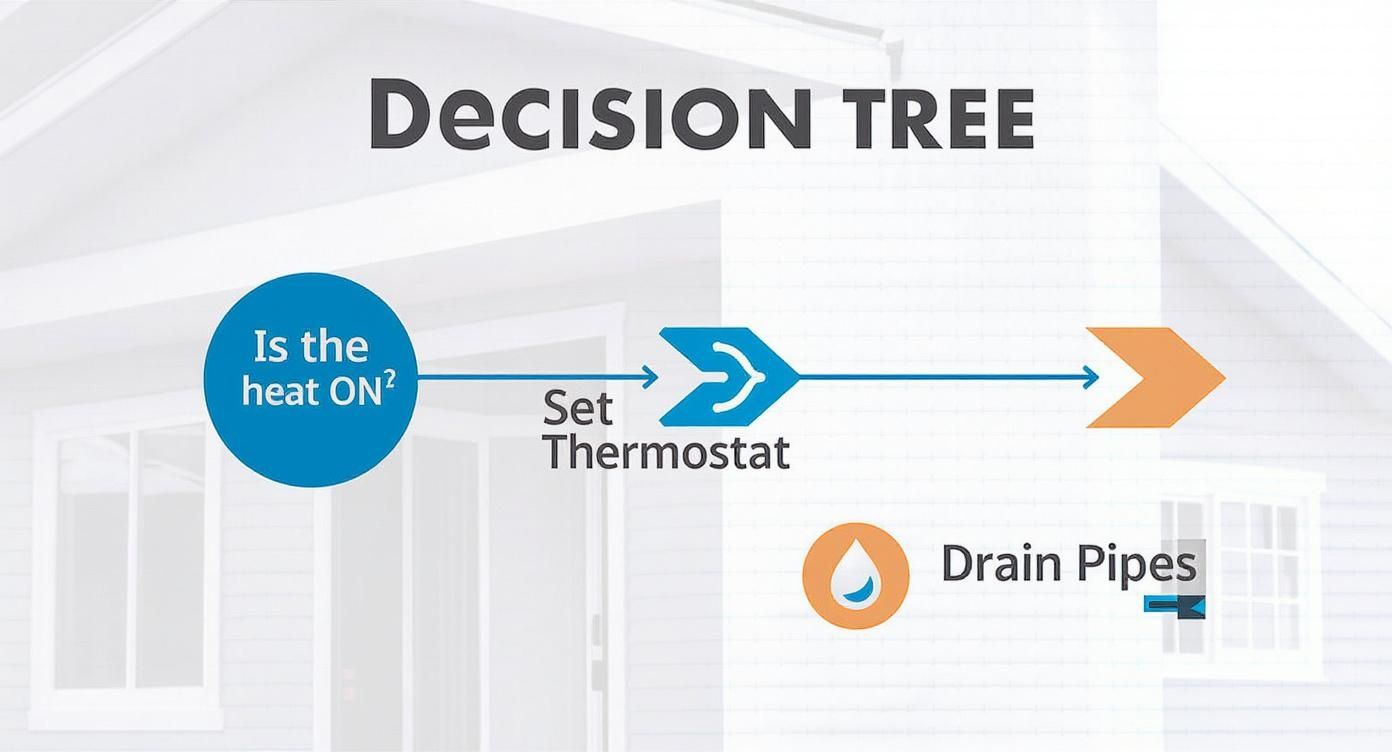
Ultimately, it all boils down to whether you keep the utilities on or shut everything down to cut costs and minimize risk.
Strategy 1: The 'Wet' Winterization
A "wet" winterization is the simpler approach: you're just keeping the heat and water on, but at a lower level. This is usually the best route for homes currently on the market or if you know you'll be stopping by frequently.
The goal here is pretty simple: maintain a consistent, low temperature throughout the entire house.
- Set the Thermostat: Don't let the heat drop below 55-60°F. This is the sweet spot—warm enough to keep pipes safe but low enough that your utility bills don't go through the roof in your empty Parma or Lorain home.
- Open Cabinet Doors: This is a classic, low-tech trick for a reason. Open up the cabinet doors under all your sinks, particularly any on exterior walls. It lets the warmer air from the house circulate around the plumbing and chase away cold spots.
- Let Faucets Drip: When you know an extreme cold snap is coming, letting a few key faucets run a very slow, steady drip can be a lifesaver. Moving water has a much harder time freezing.
This method takes less work upfront, but it does mean you're still paying for utilities. The biggest risk? A furnace failure. If the heat goes out unexpectedly, your home is left completely unprotected.
Strategy 2: The 'Dry' Winterization
Now, a "dry" winterization is a more involved process, but it offers the most complete protection and, frankly, the best peace of mind. This method means draining the entire plumbing system so there's literally no water left to freeze. It's the go-to option if you don't want to think about monthly bills or potential equipment failures.
You have to be thorough, though. This is a multi-step process that needs to be done right.
- Shut Off the Main Water Valve: First things first, find the main water supply to the house and shut it off completely.
- Drain Every Line: Go through the house and open every single faucet, starting from the top floor and working your way down to the lowest level. Don’t forget showers, tubs, and any outdoor spigots. Flush every toilet until the tanks are empty.
- Address the Water Heater: Turn off the gas or electricity to the water heater. Then, hook up a hose to the drain valve at the bottom and let it empty completely.
- Use an Air Compressor: To be absolutely sure every last drop is gone, pros use an air compressor to blow any remaining water out of the lines. It’s a crucial step for a truly "dry" system.
- Add Antifreeze: Pour a non-toxic RV/marine antifreeze into every toilet bowl, toilet tank, and P-trap under the sinks and drains. This prevents any small amount of residual water from freezing and cracking the porcelain or pipes.
Knowing the right way to prevent pipe freezing is critical, as one mistake can be incredibly costly. While a dry winterization is more work, it completely eliminates those monthly utility bills and the anxiety of a furnace dying during a blizzard.
Key Takeaway: If you can't check on the property regularly or need to cut utility costs, a 'dry' winterization is your safest bet. If the house is actively for sale and needs to be ready for showings, a 'wet' winterization may be more practical—but it demands constant vigilance.
Both methods take time and effort. For homeowners already dealing with financial stress or the emotional weight of selling a loved one's home, the process can feel overwhelming. If you’re looking for a way to bypass this entire ordeal, you can sell your house fast in Cleveland to a trusted cash buyer like Home Sweet Home Offers. We buy houses as-is, so you don't have to worry about winterization, repairs, or ongoing bills.
Sealing Your Home's Exterior Envelope
Once you've handled the guts of the house—the plumbing and heating—it's time to button up its protective "envelope." A Cleveland winter is no joke, and that cold, damp air is a master at sneaking into older homes, whether they're in Garfield Heights or University Heights.
Sealing up the exterior isn't just about keeping the house a few degrees warmer. It’s about defending the very pipes you just worked so hard to protect.
Think of your vacant house like a boat sitting in the water. A few small leaks might not seem like a big deal at first, but they can lead to serious trouble. A drafty window or a small gap under a door can create a frigid microclimate inside a wall cavity or under a kitchen sink. Even with the thermostat set to a "safe" 55°F, these cold spots can easily dip below freezing.
Finding and Fixing Air Leaks
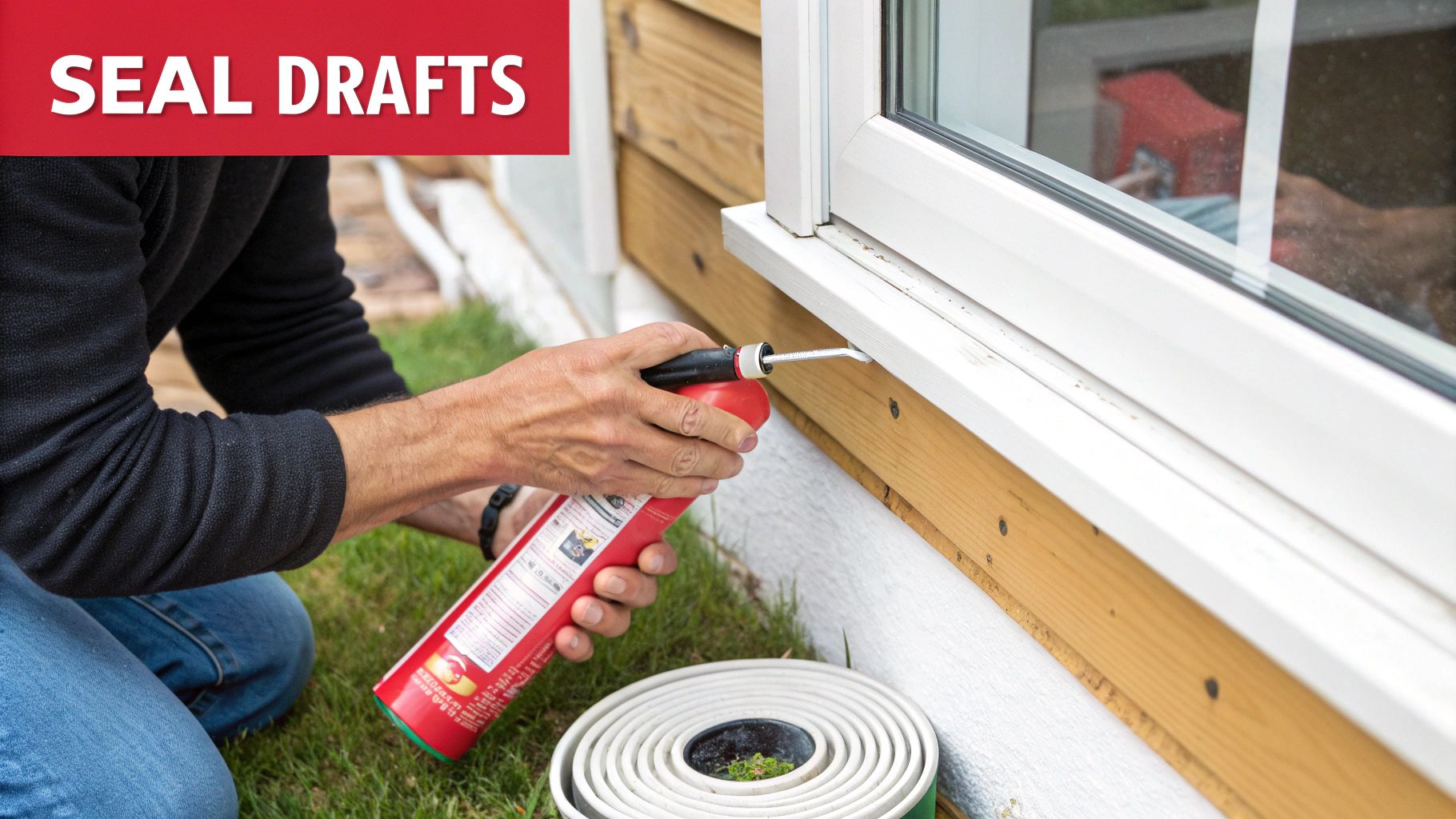
First things first: you've got to hunt down and kill every draft you can find. This is one of the cheapest, highest-impact jobs you can do, and it makes a world of difference. Grab a few tubes of exterior caulk and a roll of weatherstripping, and get ready to do a slow, methodical walk-through of the property.
You’ll want to pay extra close attention to these usual suspects:
- Windows and Doors: This is ground zero for drafts. Look for cracked, peeling caulk around the outside frames and check for worn-out, compressed weatherstripping inside.
- Utility Penetrations: Follow every pipe, wire, and vent where it enters the house. These openings are notorious for having gaps that let frigid air pour right into the basement or crawl space.
- Foundation Gaps: Take a close look at the sill plate—that’s the spot where the wooden frame of the house rests on top of the concrete foundation. Even tiny cracks here can let in a surprising amount of cold.
Sealing these gaps is a pretty straightforward DIY project you can knock out in an afternoon. It’s a small investment of your time that pays huge dividends in protecting your property.
Insulating Vulnerable Pipes
With the drafts sealed, it's time to give your most vulnerable pipes an extra winter coat. Any plumbing running through unheated or poorly insulated areas is a prime candidate for freezing, even if you’ve already drained the system.
We're talking about the pipes in your basement, crawl space, attic, or those running along the inside of exterior walls. These zones can get significantly colder than the main living areas.
A simple foam pipe sleeve is one of the cheapest and most effective forms of insurance you can buy for a vacant home. For just a few dollars per pipe, you can dramatically lower the risk of a freeze, giving you critical peace of mind.
Putting them on couldn't be easier. The foam tubes are pre-slit; you just cut them to the right length with a utility knife and pop them over the pipes. It’s a ten-minute job that can prevent a catastrophic, multi-thousand-dollar failure.
Preventing Ice Dams on Your Roof
Ice dams are a classic—and incredibly destructive—Northeast Ohio winter problem. They’re thick ridges of ice that form at the edge of a roof, blocking melting snow from draining away. The water gets trapped, backs up under the shingles, and starts leaking into your attic, ruining insulation and rotting the roof deck.
The real culprit here is heat escaping from the house into the attic. This warms the underside of the roof, melting the snow on top. The water then runs down to the cold eaves, where it refreezes, and the dam begins to build.
The solution isn’t just about adding more insulation; it's about ensuring proper attic ventilation. A well-ventilated attic stays cold, close to the outdoor temperature, which prevents the snow on the roof from melting in the first place. Make sure your soffit and ridge vents are clear of insulation, leaves, or any other debris. For a much deeper dive, our Cleveland winterization guide for protecting your roof lays out more detailed strategies.
Look, we get it. For many homeowners, especially those who inherited a property from out of state or are facing financial hardship, this list of chores can feel overwhelming. If you're in Euclid or Elyria and the idea of caulking windows or climbing into a dusty attic is just too much, remember that you have other options. When you sell your house as-is in Cleveland, you hand all these headaches over to someone else. Home Sweet Home Offers can make a fast cash offer, letting you walk away from the stress and winter worries for good.
Securing and Monitoring Your Vacant Property
Once you've buttoned up the house itself, the next big job is security and monitoring. A vacant house in Cleveland is vulnerable to more than just the cold; an empty property can easily attract unwanted attention, from vandals to squatters. We understand—this is a huge source of stress, especially if you're trying to manage an inherited home in Elyria or an empty rental in Lorain and can't be there every day.
The good news? Securing your property doesn’t have to be some complex, expensive ordeal. A few practical moves can make a world of difference, protecting your investment from both the harsh Ohio winter and potential human threats.

Essential Exterior Preparations
Your first line of defense is always the home's exterior. A little bit of simple maintenance now will head off some of the most common—and costly—winter disasters.
- Clean the Gutters: Clogged gutters are a recipe for destruction. When they’re packed with leaves, melting snow and ice have nowhere to drain. This leads to ice dams, which can force water back up under your roof shingles and straight into your attic.
- Disconnect Hoses and Shut Off Spigots: This is non-negotiable. Always disconnect garden hoses. Then, head inside to find the interior shut-off valve for each outdoor faucet, turn it off, and then open the outside tap to drain any water left in the pipe. This simple step prevents the spigot from freezing and bursting the pipe connected to it.
- Inspect the Roof: Get a good look at the roof before the first heavy snowfall hits. Check for any loose, curled, or missing shingles. A small weak spot can quickly become a massive leak under the weight of wet, heavy snow.
These are straightforward jobs that will save you from a world of hurt later. They are a critical part of how to protect a vacant home during freezing temperatures.
Creating the Illusion of Occupancy
A house that looks lived-in is a house that thieves tend to skip. You don't need a high-tech security system for this; a few simple tricks are often just as good.
Start by plugging a few indoor lamps into automatic timers. Set them to switch on and off at different times in different rooms to mimic someone actually being home. It’s one of the easiest and most effective ways to deter prowlers.
You also need to make sure mail, newspapers, and flyers aren’t piling up outside. A stuffed mailbox is a neon sign that screams "NOBODY'S HOME." Ask a trusted neighbor or a friend to swing by and grab any deliveries. While they're there, they can do a quick visual check of the property for you.
We often advise clients in Maple Heights and Bedford to connect with a reliable neighbor. Having a local set of eyes on the property provides invaluable peace of mind, especially when you can't be there yourself.
Leveraging Modern Monitoring Tools
Today's tech gives you affordable and surprisingly powerful ways to keep an eye on your vacant property from anywhere. These gadgets aren't just for fancy smart homes anymore; they're accessible tools that can warn you about problems before they become catastrophes.
- Smart Temperature Sensors: These little devices are an absolute game-changer. Stick one in the basement or near pipes that are prone to freezing. If the temperature drops below a level you set (say, 45°F), you get an instant alert on your phone. That warning gives you precious time to act before pipes freeze solid.
- Video Doorbells and Cameras: A video doorbell lets you see exactly who's at your front door, whether it's a delivery driver or someone who has no business being there. Motion-activated security cameras can give you even more coverage around the property.
- Water Leak Detectors: For just a few bucks, you can place these sensors near water heaters, sump pumps, or under sinks. The second they detect moisture, they'll sound an alarm or send a notification straight to you.
The stress of maintaining a vacant property, especially during a brutal Cleveland winter, is immense. It's a constant worry for those dealing with a divorce, an inherited home, or the financial strain of an extra mortgage. If the tasks of securing, monitoring, and winterizing feel like too much to handle, remember you have a straightforward alternative. At Home Sweet Home Offers, we buy houses in Cleveland as-is. You can avoid the entire process and get a fast cash offer, letting you move on with certainty and relief.
Understanding the Costs of Winterizing a Vacant Home
Let's get right down to the numbers. When you're dealing with a vacant property in Cleveland, especially one you might need to sell, every single dollar counts.
We understand. The thought of spending more money on a house you’re trying to move on from is tough. But believe us when we say that proactive winterization is one of the smartest investments you can make. It’s about creating a realistic budget and understanding the powerful financial trade-off you’re making.
Breaking Down the Expenses
The cost to winterize your place can swing pretty widely, depending on whether you roll up your sleeves yourself or bring in a pro. Both routes have their place, and the right choice really hinges on your comfort level with this kind of work, how much time you have, and the property itself.
- DIY Winterization: This is easily the most budget-friendly option. Your main costs will be materials like foam pipe insulation, caulk, weatherstripping, and some non-toxic RV antifreeze. For a standard home in Parma or Lakewood, you're probably looking at around $75 to $200 in supplies from the hardware store.
- Professional Services: Hiring a licensed plumber or an HVAC technician brings invaluable peace of mind. A pro has the right tools, like an air compressor, to make absolutely certain every last drop of water is blown out of the lines. This is the way to go for out-of-state owners or anyone who isn't comfortable tinkering with plumbing.
Data shows a professional winterization service typically runs between $200 and $800, depending on the home's size. That might seem like a lot, but it’s a tiny fraction of the average repair cost for freeze damage, which clocks in at over $5,000 per incident.
Winterization Investment vs. Potential Repair Costs
To put it in perspective, let's look at the proactive investment versus the potential financial nightmare of inaction.
| Action | Typical Cost in Cleveland | Potential Cost of Inaction (Per Incident) |
|---|---|---|
| DIY Materials | $75 – $200 | $5,000+ (Burst pipe, minor water damage) |
| Professional Winterization | $200 – $800 | $10,000+ (Significant water damage, drywall repair) |
| Full System Drain & Seal | $300 – $1,000 | $15,000 – $20,000+ (Catastrophic failure, mold, structural repair) |
The table makes it starkly clear: a small, controlled expense now prevents a massive, uncontrollable one later.
The Real Cost of Doing Nothing
This is where the conversation gets serious. The couple hundred bucks you spend on winterization is your shield against a truly catastrophic bill. We’ve walked into vacant homes after a freeze and seen the devastation firsthand—it’s not pretty.
The decision isn't just about spending a few hundred dollars now; it's about avoiding a potential $15,000 to $20,000 repair bill later. That cost includes water extraction, mold remediation, drywall replacement, new flooring, and repairing the initial plumbing break.
For homeowners facing foreclosure, managing an inherited estate, or simply trying to downsize, an unexpected five-figure repair bill is a financial disaster. It can completely derail a sale, drain your savings, and pile an incredible amount of stress onto an already tough situation.
If you decide to keep the heat on instead of a full winterization, there are ways to manage those bills. Check out our guide on how to save on heating bills during a Cleveland winter for practical tips.
Ultimately, the money spent on winterizing isn't just another bill. It's insurance. It's peace of mind. It’s protecting the value of your asset.
But if even that initial cost feels like too much of a burden, that's a strong signal that you might need a different solution. When you can’t afford the basic upkeep, it’s often smarter to sell your house as-is in Cleveland. A cash buyer like Home Sweet Home Offers takes on all that risk, letting you walk away clean without spending another dime.
The Simple Alternative to Winter Worries
Feeling a little overwhelmed by that winterization list? We get it. Winterizing an empty house in Cleveland isn't just a weekend project; it's a serious investment of time, money, and mental energy. For a lot of homeowners, it’s a burden they just can't take on.
Maybe you've inherited a property over in Euclid but live two states away, making hands-on management impossible. Perhaps you're in Garfield Heights dealing with financial strain, and the thought of paying another round of utility bills or facing a surprise repair is just too much. Sometimes, you're just done with the responsibility and ready to move on.
A Way to Skip the Winterization Checklist Entirely
There’s another path you can take. For many people in these exact situations, the most powerful and practical solution is to sell the house as-is for cash.
Think about it. You could skip every single step we just walked through.
- No need to drain a single pipe or lie awake wondering if you missed a spot.
- No more paying for heating oil or gas just to keep an empty house from freezing.
- No more anxiety about the furnace giving out during a brutal polar vortex.
- No more asking neighbors in Lakewood or Parma to swing by and check on things.
Selling directly offers an immediate off-ramp from the stress and financial drain of owning a vacant property. Instead of pouring more money into an asset, you can pull cash out of it and finally close that chapter for good.
How a Cash Sale Ends the Winter Headaches
When you decide to sell your house fast in Cleveland to a company like Home Sweet Home Offers, you're essentially handing over all the risks and responsibilities. The moment we agree on a fair price, the property's upkeep is no longer your problem.
This isn’t just about dodging a few chores. It’s about securing total peace of mind. A fast cash offer gives you certainty in a very uncertain season, letting you walk away without ever worrying about a burst pipe or a crippling repair bill again.
This option is a genuine lifeline for homeowners in tough spots:
- Out-of-town heirs who simply can't manage an inherited home from a distance.
- Landlords in Lorain who are tired of dealing with empty, high-maintenance rentals.
- Sellers facing foreclosure who need a quick, guaranteed exit strategy.
- Anyone downsizing who just doesn't have the bandwidth to maintain two properties.
If the thought of another Cleveland winter spent worrying about an empty house is weighing you down, we're here to help. Contact Home Sweet Home Offers for a free, no-obligation cash offer. You can get a fair price, close on your own timeline, and finally feel the freedom to move forward without the weight of winter on your shoulders.
Got Questions About Your Vacant Property? We've Got Answers.
When you're dealing with an empty house for the first time, especially in a place like Cleveland where winters don't mess around, a lot of questions come up. We hear them all the time. Here are some quick, straightforward answers to the things homeowners worry about most.
So, What's This Going to Cost Me?
The price tag for a professional winterization can swing wildly, anywhere from $65 to $1,000. It really depends on the size of your house and exactly what you need done.
A basic job—shutting off the main water valve, draining the pipes, and pouring in some RV antifreeze—is going to be on the lower end of that range. If you want to dig deeper into the costs, the experts at angi.com have a great breakdown of winterization expenses.
Can I Just Shut Everything Off?
You bet. For a lot of people, this is actually the smartest move.
Going for a full "dry" winterization means the water is completely off and every last pipe is drained. This totally eliminates the nightmare scenario of a burst pipe. The trade-off? No heat. In the depths of a brutal cold snap, that can lead to some cosmetic issues like paint peeling or even small drywall cracks.
How Often Do I Need to Swing By and Check on the Place?
Even after you've buttoned everything up for the winter, you can't just walk away. It's a good rule of thumb to have someone lay eyes on the property at least once a week.
This is a huge deal for security. It also helps you catch small problems—a new roof leak, a broken window, or vandalism—before they spiral into disasters. Having a trusted neighbor in a suburb like Euclid or a local property manager in your corner can be an absolute lifesaver.
The biggest mistake we see is homeowners thinking a winterized house is a "set it and forget it" situation. It's not. Regular check-ins are non-negotiable for security and often a requirement to keep your insurance policy active.
For many homeowners, especially those who've inherited a property or are already stretched thin financially, this ongoing responsibility is just too much to handle.
If the thought of babysitting an empty house through another Cleveland winter feels overwhelming, there’s an easier way. Home Sweet Home Offers can take the entire problem off your hands. We buy houses as-is for a fair cash price, letting you move on without the stress and headaches. Get your free, no-obligation cash offer today and put the worry behind you for good.