
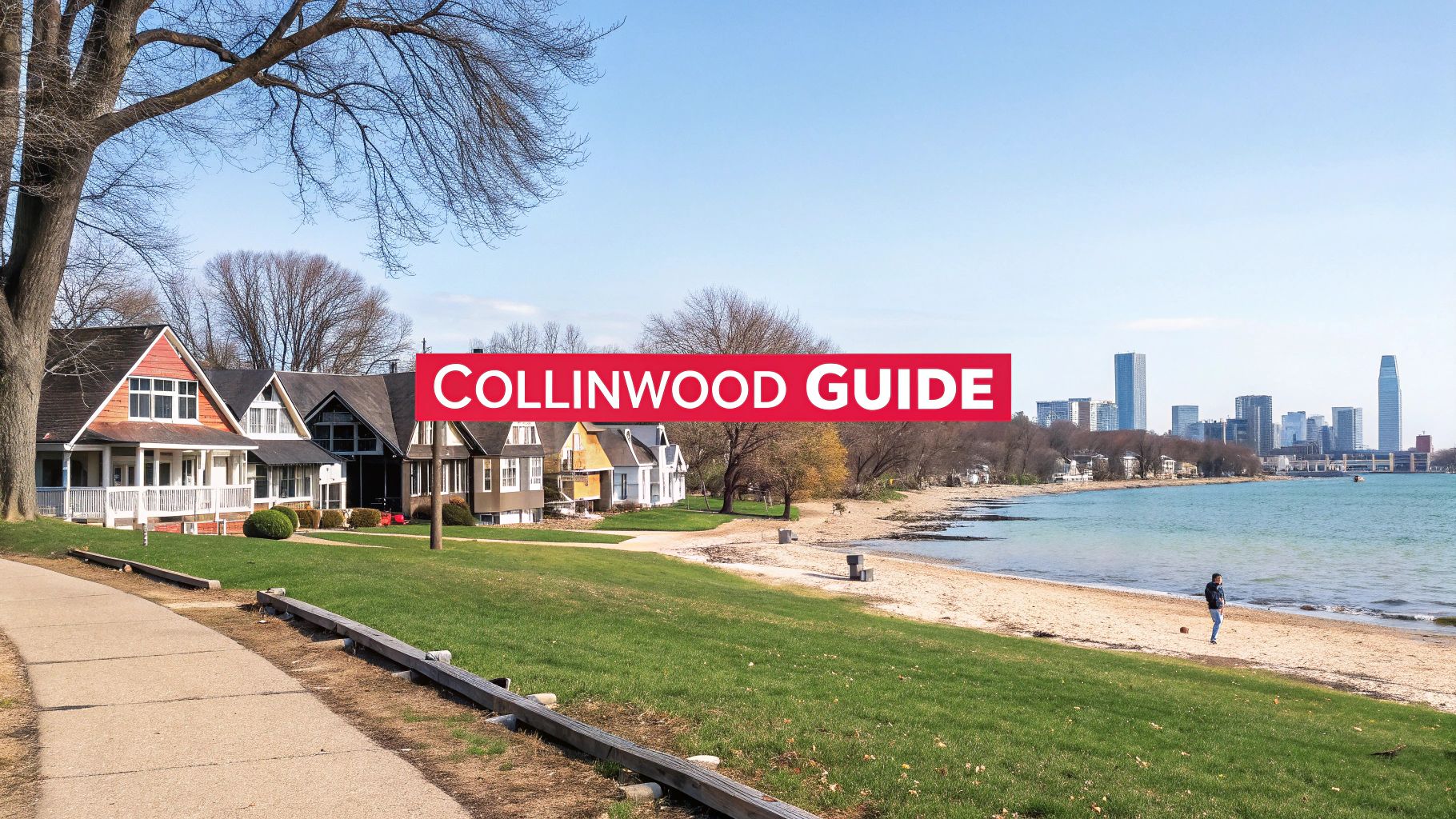
Welcome to Collinwood, one of Cleveland’s largest and most storied neighborhoods on the east side. If you're a homeowner here, you understand the unique character of this community—from the breezy lakeside charm of North Collinwood to the deep industrial roots of South Collinwood. We also understand that owning a home here, especially an older one, comes with its own set of joys and challenges. You might be feeling overwhelmed by repairs, dealing with an inherited property, or simply ready for a change.
This guide is for you. We’ll provide a real, boots-on-the-ground look at the local history, the current housing market, and the practical selling options you have. Our goal is to empower you with the information you need to make a smart, confident decision about your property. If the thought of listing your house, dealing with repairs, and navigating inspections feels stressful, know that there are simpler solutions. Home Sweet Home Offers is here to provide a clear, stress-free path forward.
The History of Collinwood: Forged by Rail and Resilience
To understand Collinwood today, you have to look at its past as a gritty, hardworking railroad town. Long before it was part of Cleveland, Collinwood was its own village, built around the massive Lake Shore and Michigan Southern Railway. The Collinwood Yards weren't just a local landmark; they were one of the most vital rail hubs in the Midwest, and that industrial heartbeat shaped everything.
This boom drew waves of immigrants, especially from Slovenia and Italy, who came for the promise of steady work. They built the tight-knit community from the ground up—the worker's cottages, the corner stores, and the churches that are still the backbone of the neighborhood. That rich heritage is baked right into the architecture you see on every street, from the modest homes in South Collinwood to the larger Colonials up north.
A Story of Tragedy and Reform
But Collinwood’s story isn't just about industry; it’s also one of incredible strength in the face of tragedy. The neighborhood is known nationally for the devastating Collinwood School Fire of 1908, a disaster that claimed the lives of 172 children and two teachers. The fire, caused by inward-swinging doors that trapped students inside, was a horrific event that sparked a nationwide movement, forcing sweeping changes to fire safety and school construction codes across America. It’s a somber but important part of Collinwood’s legacy, a moment that showcased the community's resilience and ultimately made schools safer for everyone. You can read more about this historic event in the Encyclopedia of Cleveland History.
How One Town Became Two Distinct Communities
This history is exactly why Collinwood feels like two separate places today. Even after being annexed into Cleveland between 1910 and 1913, the neighborhood was already on two different tracks.
- South Collinwood remained the industrial core. It grew up around the factories and rail lines, with practical, dense housing built for the workforce—think smaller single-family homes and lots of doubles.
- North Collinwood, on the other hand, took advantage of its beautiful Lake Erie shoreline. It blossomed into a more residential and recreational area, attracting families who wanted lakefront living and a little more breathing room.
This split is the key to understanding the local real estate market. A home in South Collinwood often comes with a different set of opportunities and challenges than a lakefront property in North Collinwood. Knowing this history is the first step to figuring out your own home's value and the best way to navigate a sale in this unique part of Cleveland.
How Collinwood Is Divided: North vs. South
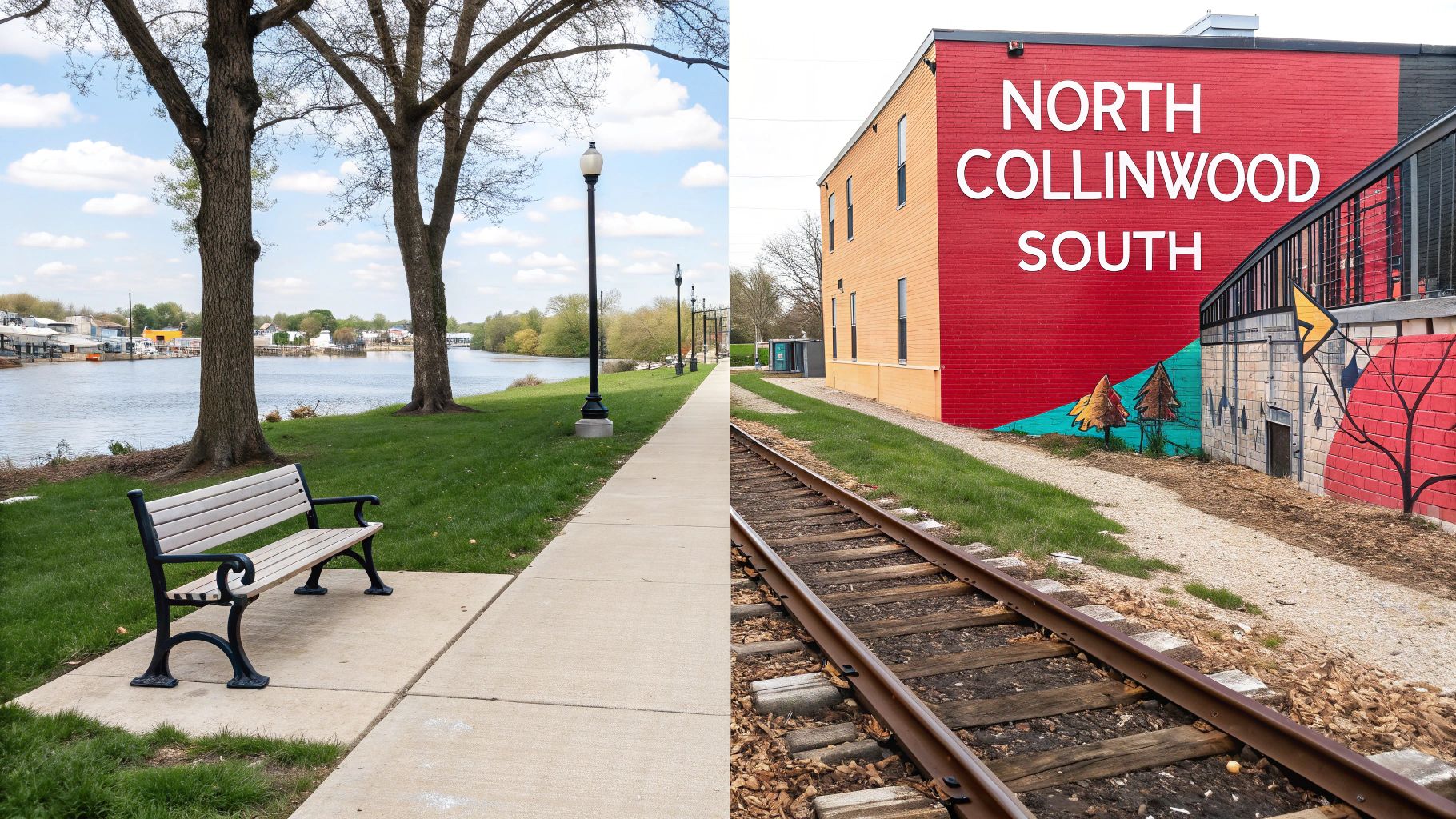
When you talk about Collinwood Cleveland, you’re really talking about two distinct communities, each with its own character, housing stock, and market pressures. For any homeowner here, understanding which side of the tracks you’re on—and in Collinwood, that’s sometimes literal—is crucial for understanding your property's value and who your likely buyer will be.
This split isn't just about geography; it's a deep-seated cultural and economic divide that creates different opportunities and challenges for sellers.
A. North Collinwood
North Collinwood’s identity is shaped by its most dominant feature: Lake Erie. Being right on the water gives the area a relaxed, almost resort-like feel you won't find further inland. It's where you see people flocking to Euclid Beach Park, boaters launching from Wildwood Marina, and a vibrant arts scene buzzing in the Waterloo Arts District.
The homes here naturally reflect that lifestyle. You’ll find a mix of well-kept bungalows, classic Colonials, and a few lucky properties with coveted lake views. Because of this, North Collinwood tends to attract owner-occupants, families, and creatives looking for a walkable, arts-focused community.
B. South Collinwood
Head south of the tracks, and the picture changes. South Collinwood is still firmly connected to its industrial, working-class history. It’s an area known for two things: incredible affordability and a high density of housing. The real estate here is dominated by smaller single-family homes, classic Cleveland doubles, and a significant number of multi-family buildings.
This combination has turned South Collinwood into a major hotspot for real estate investors. The housing stock is practically tailor-made for building rental portfolios, and there's a strong market for Section 8-friendly properties. For homeowners, this means the likely buyer for your property might be an investor rather than a family looking to move in. Understanding this difference is key to a successful sale.
What Collinwood Is Known For
Collinwood's identity is a unique blend of natural beauty, artistic energy, and deep-rooted cultural heritage. It’s a neighborhood of contrasts, offering something for everyone from outdoor enthusiasts to art lovers.
A. Lakefront Recreation
One of Collinwood’s biggest draws is its direct access to Lake Erie. This isn't just a distant view; it's a tangible part of daily life.
- Euclid Beach Park & Pier: The historic site of a beloved amusement park is now a beautiful public space with a sandy beach, a new pier, and stunning skyline views.
- Wildwood Marina: A hub for boaters, kayakers, and anglers looking to get out on the water.
- Cleveland Metroparks Euclid Creek Reservation: This reservation connects the neighborhood to a network of trails perfect for hiking and biking, offering a green escape right in the city.
B. Waterloo Arts District
North Collinwood is home to one of Cleveland's most vibrant and authentic arts scenes. The Waterloo Arts District is a walkable stretch packed with independent galleries, artist studios, and live music venues.
The legendary Beachland Ballroom anchors the district, drawing national acts and fostering a thriving local music scene. Monthly art walks and colorful murals make this a dynamic and creative place to live and visit.
C. Cultural Heritage
Collinwood’s history is alive in its cultural fabric. The strong Slovenian and Italian roots that built the neighborhood are still present in its local bakeries, delis, and long-standing social clubs. Generations of families have stayed in the area, contributing to a strong sense of community and tradition that you can feel in the family-owned businesses and historic churches.
D. Affordability
In a city where home prices are rising, Collinwood remains one of the most affordable lakefront neighborhoods in Cleveland. This accessibility attracts first-time buyers who are priced out of other east-side suburbs and investors seeking strong returns. For many, it’s a chance to own a spacious, historic home without breaking the bank.
E. Community Revitalization Efforts
There's a palpable sense of forward momentum in Collinwood. Revitalization efforts, particularly around the Waterloo Arts District, are bringing new life to the commercial corridors. Community gardens are popping up on vacant lots, new murals add color to brick walls, and city investments are helping stabilize the lakefront, ensuring its beauty for future generations.
Things to Do in Collinwood
Whether you're a long-time resident or just exploring, Collinwood offers a surprising number of activities, especially in the more entertainment-focused North Collinwood.
- Catch a show: See a concert at the iconic Beachland Ballroom, a cornerstone of Cleveland's indie music scene.
- Explore the arts: Stroll through the Waterloo Arts District during a monthly art walk, pop into unique galleries, and discover local artists.
- Enjoy the lakefront: Walk the pier at Euclid Beach Park, have a picnic at Sims Park, or simply enjoy the sunset over Lake Erie.
- Get on the water: Launch a kayak or go fishing at Wildwood Marina.
- Dine locally: Grab a bite at one of the neighborhood’s cozy cafes or long-standing family restaurants.
- Bike the trails: Hop on the trails at the Euclid Creek Reservation for a scenic ride.
- Join community events: Look out for street festivals, parades, and cultural events that celebrate the neighborhood's unique heritage throughout the year.
While North Collinwood is the hub for entertainment, South Collinwood provides quieter residential pockets, offering a peaceful retreat just a short drive from the action.
Housing and Architecture in Collinwood
The homes in Collinwood tell the story of its history. From grand Colonials to humble worker cottages, the architecture reflects the neighborhood's development over the last century. For homeowners, this means living with character and charm, but it can also mean dealing with the realities of aging properties.
A. Classic 1920s and 1930s Colonial Homes
These are the quintessential Collinwood homes, found in both the north and south sections. They are known for their spacious layouts, big front porches, original hardwood floors, and charming built-ins. While beautiful, they often require updates to their electrical and plumbing systems.
B. Bungalows and Cape Cod Homes
These smaller, practical homes are common starter homes throughout the neighborhood. Their manageable size makes them affordable and relatively easy to renovate, attracting first-time buyers and DIY enthusiasts.
C. Lakefront and Near-Lake Homes
Properties in North Collinwood with proximity to Lake Erie command higher prices. This stock is a mix of older, well-preserved homes and newer renovations. Some offer stunning lake views or direct beach access, making them highly desirable.
D. Doubles and Multifamily Properties
A significant portion of Collinwood's housing, especially in South Collinwood, consists of two-family homes and larger apartment buildings. These are the backbone of the local rental market and are popular with investors looking for long-term rental income.
E. Worker Cottages and Historic Homes
These smaller, older homes were originally built for factory workers in South Collinwood. They offer a glimpse into the neighborhood's industrial past but often need extensive updates to meet modern living standards.
F. Vacant and Distressed Properties
Like many historic urban neighborhoods, some pockets of Collinwood are still recovering from past foreclosure waves. These properties, while challenging, also represent opportunities for investors and community development groups to drive revitalization.
Common Repair Issues in Collinwood Homes
If you own a home in Collinwood, you know that its age can bring challenges. These are the most common issues that come up during inspections and can complicate a sale:
- Roof aging and the need for a full replacement.
- Outdated electrical panels and knob-and-tube wiring.
- Original plumbing that is prone to leaks and blockages.
- Foundation cracks and damp basements common in older Cleveland homes.
- HVAC systems that are nearing the end of their life or are nonexistent.
- Sewer and drainage issues, including costly sewer line repairs.
- Deteriorating siding and energy-inefficient old windows.
- Full interior updates needed for kitchens, bathrooms, and flooring.
For a seller, these repairs can be overwhelming and expensive. Understanding these potential hurdles is the first step toward planning a successful, stress-free sale.
Collinwood Real Estate Market Overview
The Collinwood real estate market is a tale of two distinct areas, each with its own pricing, buyer profile, and market dynamics. For a homeowner, understanding where your property fits into this landscape is essential for setting realistic expectations.
A. Pricing Ranges for North vs. South Collinwood
- North Collinwood: Renovated homes here command the highest prices, especially those near the lake or the Waterloo Arts District. Unrenovated homes offer a more affordable entry point but still reflect the desirability of the location.
- South Collinwood: This area is defined by its investor-friendly pricing. Single-family homes and doubles are significantly more affordable, making them attractive for cash buyers and landlords. Prices are heavily dependent on the property's condition.
- Lakefront Houses: True lakefront properties are rare and sell at a premium, often competing with prices in more expensive suburbs.
B. Buyer Types
- First-Time Buyers: Drawn by the affordability, especially for spacious Colonials that would be out of reach elsewhere.
- Investors: A major force in South Collinwood, seeking strong rental yields and cash flow. Many are out-of-state buyers looking for affordable investment properties.
- Creative Community Members: Artists, musicians, and makers are attracted to the vibrant energy and affordable living/work spaces in the Waterloo Arts District.
- Buyers Priced Out of East-Side Suburbs: Collinwood offers a more accessible alternative to pricier areas like University Heights or Cleveland Heights.
C. Rental Market Demand
Demand for affordable rentals is high across Cleveland, and Collinwood is no exception. The neighborhood’s large stock of single-family homes and doubles performs well. South Collinwood, in particular, has a strong market for Section 8 rentals, providing consistent demand for landlords.
D. Appreciation Trends
Appreciation has been slow but steady in the more stable parts of North Collinwood, especially as the Waterloo district gains popularity. In South Collinwood, appreciation is more street-by-street and heavily tied to the level of renovation and investor activity on a particular block.
E. Market Challenges
- Aging Homes: The biggest challenge is the sheer number of homes requiring significant repairs, which can deter traditional buyers.
- Appraisal Issues: In areas with a mix of renovated and distressed properties, appraisals can be inconsistent, sometimes causing financing to fall through.
- Varying Desirability: Value can change dramatically from one block to the next, making pricing complex.
- Vacant Lots: Some pockets have a higher concentration of vacant lots, which can impact the perception of a street.
For a deeper dive into market trends, explore our articles on the broader Cleveland real estate market.
Pros and Cons of Living in Collinwood
Every neighborhood has its strengths and weaknesses. For homeowners and potential buyers, it’s important to have a balanced perspective on Collinwood.
Pros
- Affordable Housing: You can get more house for your money here than in almost any other lakefront community in the area.
- Lakefront Access: Proximity to Lake Erie, with beautiful parks, beaches, and recreational opportunities.
- Increasing Arts Scene: The Waterloo Arts District provides a vibrant, creative hub with galleries, music, and events.
- Spacious Historic Homes: The neighborhood is filled with large Colonials and bungalows with classic architectural details.
- Growing Cultural District: A strong sense of community and a growing list of amenities are making the area more desirable.
Cons
- Many Homes Need Significant Repairs: The aging housing stock means many properties require costly updates.
- Safety Varies by Block: Like many urban neighborhoods, the perceived safety can differ significantly from one street to the next.
- Nearby Industrial Sections: Some residential areas are close to industrial corridors, which can be a drawback for some buyers.
- Uneven Walkability: While the Waterloo district is very walkable, other parts of the neighborhood are more car-dependent.
- Appraisal Challenges: The mix of housing conditions can lead to unpredictable appraisal outcomes, complicating traditional sales.
Who Collinwood Is Best For
Collinwood's unique mix of affordability, culture, and location makes it an ideal fit for specific types of people.
- First-Time Buyers: For those seeking affordability without sacrificing space, Collinwood offers large, historic homes at a fraction of the cost of other suburbs.
- Creative Professionals: Artists, musicians, and makers are drawn to the energy, community, and affordable live/work spaces in and around the Waterloo Arts District.
- Landlords and Investors: The high rental demand and low entry prices, especially in South Collinwood, create excellent opportunities for strong rental yields and cash flow.
- Families Wanting Outdoor Access: With Euclid Beach Park, the lakefront trail, and nearby Metroparks, families can enjoy outdoor activities right in their backyard.
- Buyers Seeking Lake Proximity: If you dream of living near the lake but can't afford the prices in Lakewood or Edgewater, North Collinwood is an excellent alternative.
What Homeowners Should Know About Selling in Collinwood
If you’re a homeowner in Collinwood, thinking about selling can feel daunting. The age of the homes here often means the traditional selling process is filled with potential hurdles. We understand the stress this can cause. You love your home, but you’re worried about what an inspection might uncover.
Here’s what sellers often face when listing on the open market:
- Inspection Issues: Buyers’ inspections frequently uncover major problems like failing sewer lines, old roofs, outdated electrical systems, or foundation issues.
- Large Repair Credit Requests: When these issues pop up, buyers often demand thousands of dollars in repair credits, which cuts directly into your profit.
- Appraisal Limitations: In streets with a mix of distressed and renovated homes, an appraiser might value your property lower than you expect, causing the buyer's financing to fall through.
- Longer Time on Market: Homes that need significant updates can sit on the MLS for months, costing you time, money, and peace of mind.
The reality is that in Collinwood, the condition of your home heavily impacts who will buy it and how quickly it will sell. A fully updated home in North Collinwood may sell fast, but a property in South Collinwood with deferred maintenance will likely attract only investors. This is a tough situation, especially if you don't have the cash or energy for major renovations.
For more information, read our guide on How to Sell Your House Fast in Cleveland.
When Selling As-Is Makes More Sense in Collinwood
We speak with Collinwood homeowners every day who are facing difficult situations. Maybe you inherited a property that’s full of belongings and needs a total overhaul. Perhaps you're a tired landlord dealing with problem tenants and endless repairs. Or maybe you're facing foreclosure and need a fast, reliable solution. In these moments, the traditional real estate process simply doesn't work.
That's why so many Collinwood homeowners choose to sell their house as-is for cash. It’s a direct, simple solution that bypasses the stress and uncertainty.
Consider a cash offer if you're dealing with:
- Deferred maintenance that is too costly to address.
- An inherited home that needs a full cleanout and major repairs.
- A vacant property that is a target for vandalism or code violations.
- Problem tenants or the desire to get out of the landlord business.
- The need to avoid foreclosure and protect your credit.
- Major structural or mechanical issues that scare away traditional buyers.
- Appraisal concerns that could kill a deal at the last minute.
- The need for a quick sale because you live out of state.
Selling as-is to a cash buyer like Home Sweet Home Offers means you can sell your house exactly as it is today. No repairs, no cleaning, no commissions, and no surprises. We provide a fair, transparent offer and let you close on your timeline.
For a no-obligation cash offer on your Collinwood home, call Home Sweet Home Offers at 216-200-8010.
Fun Facts About Collinwood
- Amusement Park History: It was home to the historic Euclid Beach Park, a beloved amusement park that Clevelanders enjoyed for decades.
- Indie Music Birthplace: The Beachland Ballroom is considered a foundational venue in America's indie music movement, having hosted iconic acts early in their careers.
- A Hub for Public Art: The neighborhood is known for its vibrant murals and public art installations, especially in the Waterloo Arts District.
- One of Cleveland’s Most Diverse Neighborhoods: Collinwood has a rich history of immigration and remains one of the most culturally diverse communities in the city.
Frequently Asked Questions (FAQ)
Is Collinwood safe?
Like any large urban neighborhood, safety in Collinwood can vary by street. Areas with active community investment, like around the Waterloo Arts District and certain lakefront sections, are generally considered stable. It's always best to visit the specific block you're interested in at different times of day to get a true feel for the area.
What is the difference between North and South Collinwood?
North Collinwood is defined by its proximity to Lake Erie, the Waterloo Arts District, and a more residential, lifestyle-focused vibe. South Collinwood is more industrial in its roots, known for its affordability, higher density of rental properties, and strong investor market.
Are homes affordable in Collinwood?
Yes, Collinwood is one of Cleveland’s most affordable lakefront neighborhoods. However, the lower prices often reflect the age of the homes and the need for significant repairs and updates.
How far is Collinwood from downtown Cleveland?
Collinwood is conveniently located about 15-20 minutes by car from downtown Cleveland, making for a relatively easy commute.
Do homes sell quickly in Collinwood?
It depends entirely on the location and condition. A move-in ready home in North Collinwood can sell quickly. A property in South Collinwood needing significant work may sit on the market longer if listed traditionally, but it will sell very quickly to a cash investor.
Can I sell my Collinwood home as-is?
Absolutely. Selling as-is is a very common and often wise choice for Collinwood homeowners, especially for those with older properties needing extensive repairs. It allows you to avoid the cost, time, and stress of renovations.
Are there good rental opportunities in Collinwood?
Yes, particularly in South Collinwood. The neighborhood has a large stock of single-family homes and doubles, high demand for affordable rentals, and is considered a strong market for landlords seeking consistent cash flow.
Your Trusted Partner in Collinwood
Collinwood is an affordable, historic, and vibrant lakefront community with a growing arts scene and beautiful, spacious homes. It offers strong investment opportunities and a chance to be part of a resilient Cleveland neighborhood.
However, as a homeowner, you may be facing the challenges that come with an older property. The thought of costly repairs, stressful inspections, and uncertain timelines can be overwhelming. We understand your situation, and we’re here to help. Selling your house as-is provides immediate relief for owners who need a fast, fair, and guaranteed sale.
Thinking about selling your home in Collinwood? Home Sweet Home Offers buys houses as-is across North Collinwood, South Collinwood, and all of Cleveland. Call 216-200-8010 for a free cash offer today.
Sources
- City of Cleveland
- Cleveland Historical
- Waterloo Arts District
- MLS Market Data
- Cleveland Metroparks