
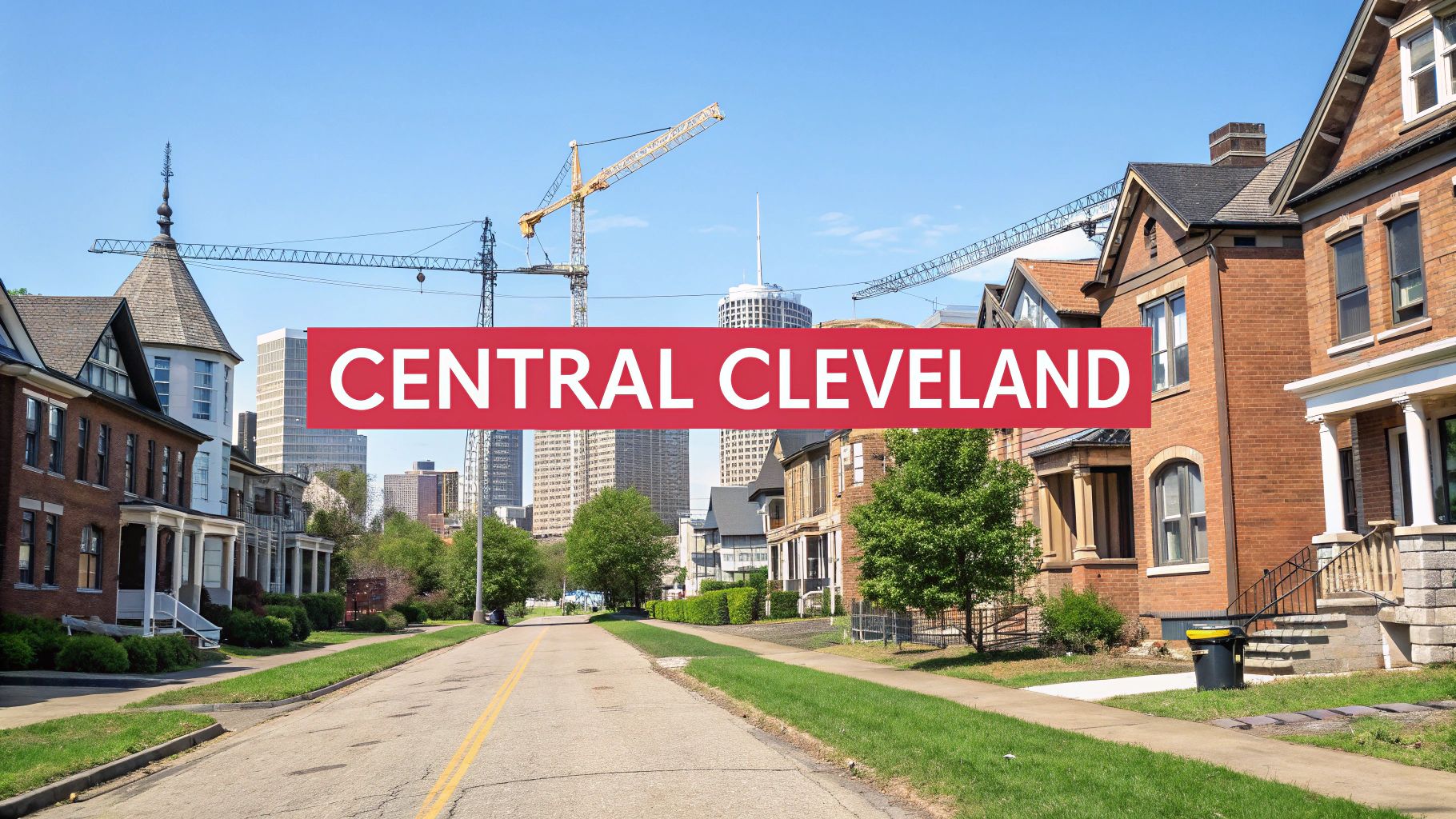
Welcome to Central, a neighborhood that's not just part of Cleveland's history—it's at the very heart of its future. Tucked right between the bustle of Downtown and the bright minds at University Circle, this community is buzzing with a unique kind of energy, one that’s built on deep roots and powerful new growth. If you're a homeowner here, you understand the unique blend of pride, history, and change that defines life in Central.
This guide is for you—the longtime residents, landlords, and families with a stake in Central. We know selling a home here isn't like selling anywhere else in Cleveland, Parma, or Lakewood. It comes with its own set of questions and challenges.
We'll dig into Central's incredible history and look at the massive redevelopment projects being driven by powerhouses like the Cleveland Clinic and Cleveland State University. This isn't just about new buildings; it's about a complete transformation that impacts your property's value and your selling options. We'll give you a real, honest picture of what it's like to live here today and what you need to know if you're considering a move.
If you’re a homeowner in Central Cleveland trying to figure out what your property is worth or what to do next, you're in the right place. Maybe you're facing major repairs, dealing with an inherited property, or just ready for a change. Whatever your situation, understanding the market is the first step. If you'd like to skip the stress and see what a fair cash offer looks like, feel free to request a no-pressure home valuation from us at any time.
The History of Central Cleveland
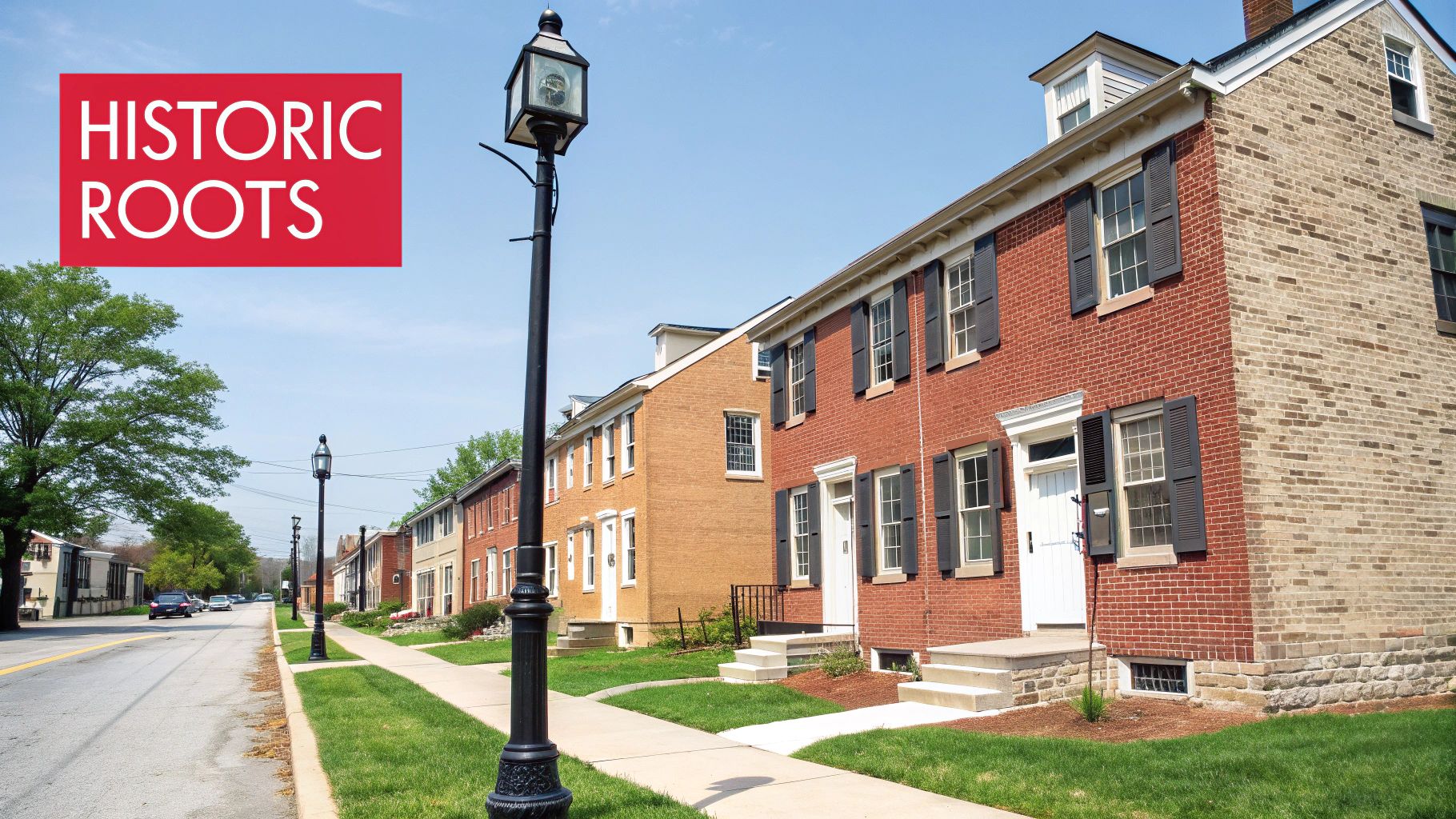
To understand the opportunities and challenges you face as a homeowner in Central today, it helps to look back. This isn't just any neighborhood; it's one of Cleveland's oldest, and its story is deeply woven into the city's identity. That history explains everything from the mix of architecture on your street to the community's incredible resilience.
From Gilded Age to Cultural Hub
Settled back in the early 1800s, Central was one of the first dense residential areas outside of Downtown. Its prime location made it a desirable address, and for a time, grand mansions reminiscent of Millionaires' Row lined parts of Central Avenue.
The neighborhood's true character was forged during the Great Migration. As African American families moved north seeking opportunities, Central became a vibrant cultural and social epicenter. It was a community filled with influential churches, lively jazz clubs, and was a heart of early civil rights activism in Cleveland. This era cemented Central's spirit of strength, community, and leadership.
Navigating Economic Shifts
Starting in the 1960s, Central, like many urban neighborhoods across America, faced severe economic decline as industrial jobs left the city. The construction of the Innerbelt freeway physically divided the community, disrupting the neighborhood fabric.
During this period, the expansion of large-scale public housing projects dramatically shaped the modern landscape. While these developments provided necessary housing, they also concentrated poverty. Many of the older, historic homes fell into disrepair, creating the diverse housing stock we see today—a mix of challenges for homeowners and opportunities for redevelopment. This complex past is precisely why a homeowner might face unexpected repair costs or why investors are so active in the area, looking for properties to revitalize. The story of Central is one of resilience, and today, that legacy is the foundation for its ongoing transformation.
Micro Neighborhoods Within Central
For a homeowner in Central, understanding that your property's value and marketability can change from one block to the next is critical. Central is less a single, uniform area and more a collection of smaller districts, each with its own unique real estate dynamics. Knowing where your home sits within this patchwork can help you understand the types of buyers you'll attract and the challenges you might face.
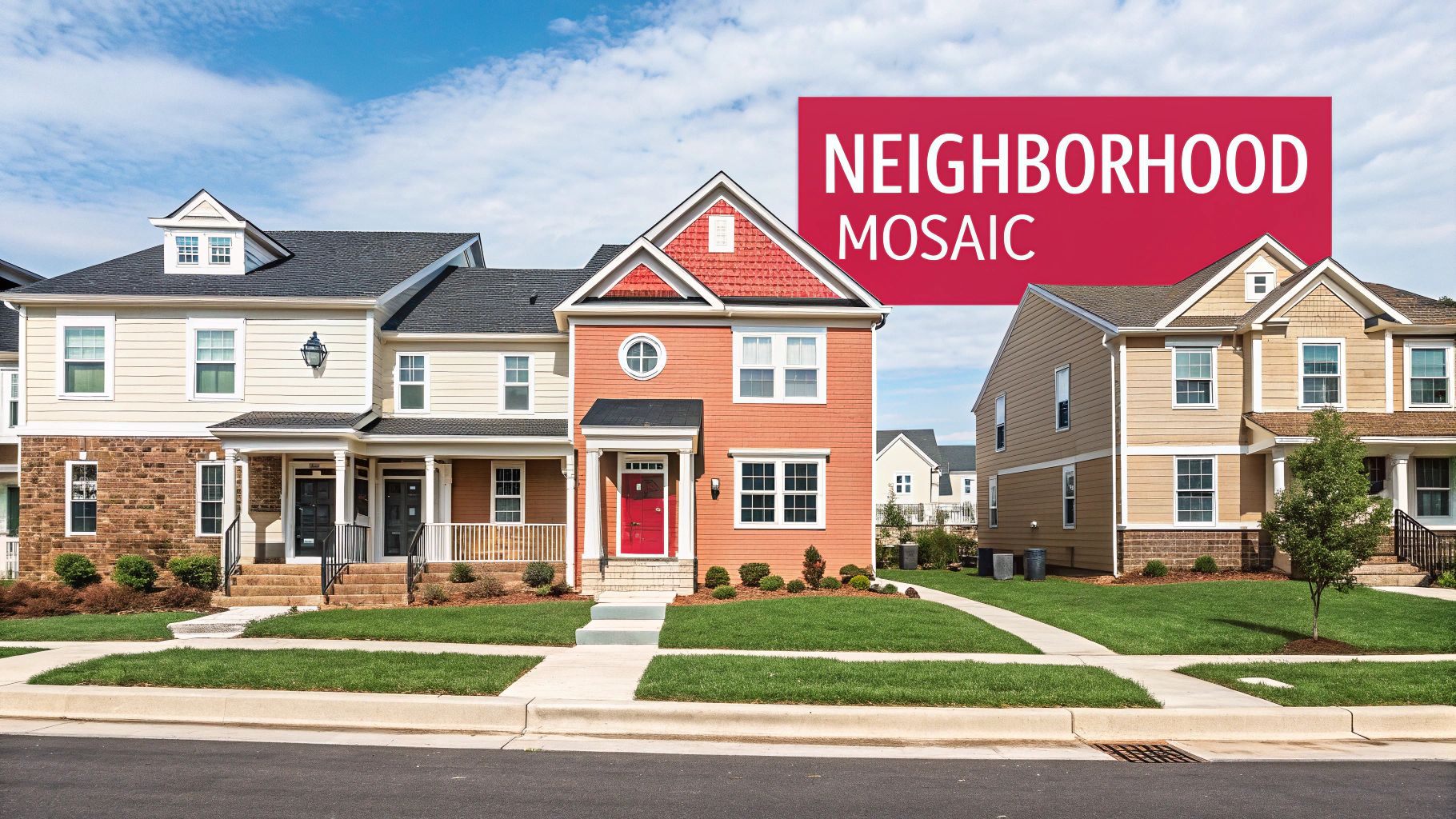
Here’s a breakdown of the key sub-areas:
A. Cedar Central District
Located closest to the Cleveland Clinic and Case Western Reserve University, this area is a hotspot of new development. New construction townhomes and mixed-income housing projects are common. For homeowners here, appreciation potential is high, but so is competition from brand-new properties. Selling an older home may require significant updates to compete.
B. Central Avenue Corridor
This historic stretch leading toward Downtown and Playhouse Square is a blend of old and new. You'll find historically significant homes mixed with vacant lots and new development projects. Its proximity to the city center is a major selling point, but the varying condition of properties can make for a challenging appraisal process.
C. Cedar Estates Area
Defined by large-scale public housing redevelopment, this zone is seeing older structures replaced with modern apartment complexes and city-backed revitalization projects. This investment is improving the overall neighborhood but can create a market dominated by renters rather than traditional homebuyers.
D. East 30th to East 55th Corridor
This corridor contains much of Central's older single-family housing stock. While some streets face instability, this is also where investor interest is highest. If you own a home here that needs repairs, you'll likely attract significant attention from cash home buyers looking for renovation projects.
E. CSU / Campus District Border
The area bordering Cleveland State University is heavily influenced by the campus. Demand for student housing is strong, making it a stable rental market. Homeowners with multi-family properties do well here, but selling a single-family home to a retail buyer can be tougher.
Understanding these nuances is key. A home in the Cedar Central District might appeal to a healthcare professional, while a duplex near East 55th is prime for an investor. This is why a one-size-fits-all sales approach rarely works in the Central Cleveland real estate market.
What Central Is Known For
For homeowners, understanding what defines Central in the eyes of buyers and investors is crucial. These are the key factors that influence property values, buyer interest, and your experience selling a home.
A. Major Redevelopment and New Housing Projects
The most visible story in Central today is redevelopment. Investment from institutions like the Cleveland Clinic and CWRU, along with local nonprofits, is fueling the construction of dozens of new apartment buildings and townhomes. Older public housing is being replaced with modern, mixed-income communities, especially near Cedar Avenue. For a homeowner, this means the neighborhood is changing fast, bringing both new energy and new competition.
B. Proximity to Downtown and University Circle
Central’s location is its superpower. It sits in a strategic sweet spot, just minutes from both Downtown Cleveland and University Circle. This incredible convenience is a major draw for commuters. Whether it's walking to Playhouse Square or catching a quick bus or train, residents have unparalleled access to the city’s biggest job centers and cultural hubs. This is a huge selling point, but only if your property can meet the expectations of buyers who want that urban lifestyle.
C. Cultural and Historical Significance
Central is more than just a location; it's a place with a soul. It was once a center of early jazz, community leadership, and civil rights activism. Historic churches and legacy organizations are still active today. This deep history gives the neighborhood a unique character that you won't find in newer suburbs like Maple Heights or University Heights.
D. Affordability
Compared to other neighborhoods so close to the city center, Central still offers affordability. Single-family homes and duplexes are priced lower than in neighboring Tremont or Ohio City. This affordability is what attracts first-time buyers and investors. For sellers, this means you'll likely deal with buyers on a budget or cash investors looking for strong rental returns, which shapes the type of offers you'll receive.
E. Access to Major Institutions
Living in Central means being next door to some of the city's most important institutions.
- Cleveland State University
- Cleveland Clinic
- Cuyahoga Community College
- The entire Downtown government and business district
This proximity creates a steady stream of renters and buyers connected to these employers, providing a reliable source of demand for housing in the area.
Things to Do in Central
One of Central’s greatest assets is its unbeatable access to the best of Cleveland. While the neighborhood itself is more residential, its location puts you at the doorstep of the city’s premier entertainment, sports, and cultural venues. This is a major quality-of-life benefit for residents and a key selling point for homeowners.
From Central, you can easily:
- Attend a world-class show at Playhouse Square, the largest performing arts center in the U.S. outside of New York City.
- Explore Downtown Cleveland, with its vibrant restaurant scene, public art, and lively events at Public Square.
- Walk or bike to the Cleveland State University campus, which offers its own schedule of events, speakers, and public spaces.
- Enjoy green space at the nearby Kingsbury Run parks and trails, part of the Metroparks system.
- Catch a game and cheer on the Browns, Guardians, or Cavaliers at the downtown sports complex, which includes FirstEnergy Stadium, Progressive Field, and Rocket Mortgage FieldHouse.
- Visit cultural destinations in neighboring Fairfax or Hough, like the Karamu House Theatre.
- Participate in community events and local markets that celebrate the neighborhood's spirit.
This incredible convenience is something many homeowners in farther suburbs like Lorain or Elyria can't offer. It highlights how Central provides a truly urban lifestyle with direct access to everything that makes Cleveland a great place to live.
Housing and Architecture in Central
If you own a home in Central, you know the housing stock here is a unique and telling story. The architecture is a living history of the neighborhood's journey, from early 20th-century family homes to modern redevelopments. This diversity creates both character and challenges, especially when it's time to sell.
A. Early 1900s Single-Family Homes
These classic Cleveland homes, often with narrow footprints and welcoming front porches, define many of Central's streets. While they hold historic charm, many are at an age where they require significant updates to meet modern buyer expectations.
B. Multi-Family and Duplex Properties
Duplexes and multi-family units are incredibly common in Central, reflecting its history as a densely populated urban neighborhood. These properties are in high demand from investors, particularly those working with Section 8 programs, due to their potential for strong rental returns. For homeowners of these properties, the most likely buyer is an investor.
C. New Construction Townhomes and Apartments
Concentrated near the Cedar Central district, these modern townhomes and apartment buildings have been built within the last 5-10 years. They cater to students and professionals working at the nearby hospitals and universities. While they command higher prices and show strong appreciation, they also set a high bar for the condition of older homes on the market.
D. Public Housing Redevelopments
Large-scale projects like the Cedar Redevelopment and Central Choice Housing are replacing outdated structures with modern, mixed-income communities. These developments are changing the face of the neighborhood and improving housing quality, but they also primarily serve the rental market.
E. Vacant Lots and Infill Opportunities
Decades of demolition have left a significant number of vacant lots scattered throughout Central. These are prime targets for developers and are a key part of the city's urban renewal strategy, offering potential for new builds.
Common Repair Issues Homeowners Face in Central
We understand that owning an older home comes with its share of surprises. In Central, many properties need more than just a coat of paint before they can be sold on the traditional market. Buyers and their inspectors will be looking for:
- Roof replacement and gutter issues.
- Outdated furnaces and lack of central air conditioning.
- Older plumbing systems that need a complete overhaul.
- Electrical upgrades to replace knob-and-tube or old fuse boxes.
- Foundation or basement moisture problems.
- Full interior rehabs, as many homes have not been updated in decades.
- Structural issues in some distressed or long-vacant properties.
- Damage from vacancy, such as vandalism or weather exposure.
These issues can be overwhelming and expensive. Trying to sell a home with these problems on the MLS is incredibly difficult and often leads to failed deals. This is a major reason why many homeowners in Central choose to sell their house as-is to a buyer who understands these challenges and is prepared to handle them.
Central Cleveland Real Estate Market Overview
As a homeowner in Central, you’re positioned in one of the most complex and rapidly changing real estate markets in Northeast Ohio. It's a market of contrasts, where new construction can stand just blocks away from homes needing full gut rehabs. Understanding these dynamics is key to making a smart decision when you sell.
A. Price Ranges
Pricing in Central is highly dependent on location and condition. A blanket price doesn't exist.
- Renovation Projects: Older single-family homes needing a full rehab are the most affordable, often selling to cash investors.
- Renovated Homes: Move-in ready homes command higher prices but face tough competition from new builds and can run into appraisal gaps.
- Duplexes: These are valued based on rental income potential and are a hot commodity for landlords.
- New Townhomes: Primarily in the Cedar Central area, these carry the highest price tags and show strong appreciation.
- Infill Lots: Vacant lots are typically purchased by developers for new construction projects.
B. Buyer Types
The buyers interested in Central are as diverse as the properties themselves.
- Investors & Landlords: This is the most active group, including both local and out-of-state buyers seeking rental properties.
- Medical Workers & Downtown Professionals: These buyers want convenience and are often looking for renovated or new-construction homes.
- Case Western & CSU Students/Staff: This group drives a significant portion of the rental market.
- First-Time Buyers: Attracted by affordability, but often need financing (like FHA loans) that comes with strict property requirements.
C. Rental Market
Rental demand is exceptionally strong due to the proximity of CSU and the Cleveland Clinic. Renovated apartments and townhomes have high occupancy rates, and there are significant opportunities for landlords participating in the Section 8 program. This robust rental market is a major reason why cash investors are so prevalent.
D. Appreciation Trends & Market Challenges
Appreciation is happening, but it's not uniform. The areas around Cedar Central are seeing rapid growth, while other parts of the neighborhood are appreciating more moderately. The long-term upside is promising due to ongoing institutional investment.
However, sellers face real challenges:
- Intense Investor Competition: Cash buyers can move quickly, often pushing out traditional buyers who need financing.
- Appraisal Gaps: A renovated home may not appraise for its sale price if the appraiser uses nearby distressed properties as comparables. This is a common deal-killer.
- Distressed Comps: The high number of homes needing full rehabs can drag down the perceived market value for the entire area.
For a broader look at regional trends, you can explore our overview of the Cleveland Real Estate Market Trends.
Pros and Cons of Living in Central
Every neighborhood has its trade-offs, and Central is no exception. For homeowners weighing their options or potential buyers considering the area, here's a balanced, transparent look at the advantages and disadvantages.
Pros
- Unbeatable Location: The proximity to Downtown and University Circle is a major advantage, offering short commutes and easy access to jobs, education, and entertainment.
- Access to Public Transit: With multiple bus lines and nearby RTA train stations, getting around the city without a car is very feasible.
- Affordable Housing: Compared to other downtown-adjacent neighborhoods, Central offers some of the most affordable home prices in Cleveland.
- Strong Redevelopment Momentum: The ongoing investment from major institutions and developers signals a positive trajectory and long-term appreciation potential.
- High Convenience for Commuters: Whether you work at the Cleveland Clinic, CSU, or in a downtown office tower, your commute is likely to be quick and easy.
Cons
- Repair-Heavy Housing Stock: Many of the homes are old and require significant investment in repairs and updates to be comfortable and marketable.
- Presence of Vacant and Distressed Properties: While improving, there are still blocks with vacant lots or blighted properties that can affect neighborhood perception and property values.
- Uneven Walkability: While you can walk to some amenities, the neighborhood's overall walkability score is inconsistent and not as strong as in denser areas like Ohio City.
- Appraisal Challenges: As mentioned, selling a renovated home can be difficult when nearby comparables are distressed, leading to appraisal gaps.
- Safety Concerns Vary by Block: Like many urban neighborhoods in transition, perceptions of safety can vary significantly from one street to the next.
Who Central Cleveland Is Best For
Central's unique mix of affordability, location, and housing stock makes it an ideal fit for specific types of buyers and residents. If you're a homeowner, understanding who is most likely to buy your property can help you position it correctly.
Central is best for:
- Investors: Those seeking strong rental demand and cash flow, especially from the student and healthcare communities, will find excellent opportunities here.
- Renovators and Flippers: Buyers looking for affordable projects with the potential for a significant return on investment will be drawn to Central's older homes.
- Healthcare Workers and University Staff: Employees of the Cleveland Clinic, University Hospitals, CSU, and CWRU who want an extremely short commute will find the location unbeatable.
- First-Time Buyers on a Budget: For those willing to put in some sweat equity, Central offers a path to homeownership close to the city center that is out of reach in more expensive neighborhoods.
- Buyers Focused on Long-Term Appreciation: Individuals who see the redevelopment momentum and are willing to invest in a neighborhood on the rise can benefit from future growth.
What Homeowners Should Know About Selling in Central
Selling a home in Central on the traditional MLS market comes with a specific set of challenges that we want you to be prepared for. It’s a different world from selling in a suburb where most homes are similar in age and condition.
Retail buyers—those who plan to live in the home—typically expect modern updates, even in a historic property. They're looking for move-in ready. This creates a disconnect with many of Central's older homes.
Here’s what often happens:
- Inspection Issues Derail Sales: A home inspector is likely to find significant issues, from outdated electrical systems to foundation problems. These findings can scare off buyers or lead to demands for costly repairs.
- Appraisal Gaps Kill Deals: As we've discussed, a beautifully renovated home can fail to appraise if it's compared to nearby distressed properties. If the buyer is using a loan, this gap can be impossible to overcome.
- Financing Hurdles are Common: Many retail buyers in this price range rely on FHA or VA financing. These loans have very strict property standards that many older homes in Central simply cannot meet without extensive, expensive upfront repairs.
- Investor Competition is Fierce: While you might want a retail buyer, the market is saturated with cash investors. Their fast, as-is offers can be more appealing than waiting for a financed buyer whose deal might fall through.
- Tenant-Occupied Homes are Tough to Show: If you're a landlord, trying to sell a home with tenants in place creates major logistical headaches and can limit your pool of potential buyers.
Buyers will almost certainly expect major systems to be updated. This includes demands for:
- Modern electrical panels and wiring
- Newer furnace and central AC units
- A roof with plenty of life left
- Fully renovated kitchens and bathrooms
- A dry basement with no signs of water intrusion
The cost of these repairs can easily run into the tens of thousands. If you're facing this situation, it may be time to consider a different path. For a smoother process, learn more about How to Sell Your House Fast in Cleveland.
When Selling As-Is Makes More Sense in Central
We've walked through the unique challenges of the Central real estate market. For many homeowners, the stress, time, and sheer cost of getting an older home ready for a traditional sale just don't add up. This is precisely when selling your house as-is for a fair cash offer becomes the most logical and empowering choice.
A cash sale is a common and smart solution in Central for a reason. It directly addresses the problems that derail traditional listings.
Consider an as-is sale if you're facing any of these situations:
- Your Property Needs a Full Renovation: If the home requires a gut rehab, it's unlikely to qualify for traditional financing. A cash buyer is equipped for this kind of project.
- You Own a Vacant Home: An empty house is a liability, at risk for vandalism, squatters, and weather damage. A fast cash sale secures the property and puts money in your pocket quickly.
- You've Inherited a Property: Dealing with a home from out of state or settling an estate with multiple heirs is complicated. A simple, direct sale avoids months of stress and expense.
- You're Behind on Taxes or Facing Foreclosure: A fast closing can provide the funds needed to settle debts and avoid a foreclosure auction, protecting your credit and giving you a fresh start.
- You're a Tired Landlord: If you're done dealing with tenant issues, evictions, or constant maintenance calls, you can sell the property as-is, tenants and all.
- Your MLS Listing Failed: If your house has been sitting on the market due to failed inspections or lowball offers, a cash offer provides a guaranteed exit.
Selling to a cash home buyer like Home Sweet Home Offers means you can skip the repairs, showings, and appraisal worries. It's a certain, no-friction closing that puts you in control.
For a fast cash offer on your Central Cleveland property, call Home Sweet Home Offers at 216-200-8010.
Fun Facts About Central
Beyond the real estate market, Central is a neighborhood with a rich and fascinating history. Here are a few interesting facts that highlight its unique character:
- It is one of Cleveland’s oldest residential neighborhoods, with roots stretching back to the early 1800s.
- Central was historically home to some of the city’s earliest streetcar lines, making it a key transit hub from the very beginning.
- During its cultural peak, Cedar Avenue featured vibrant jazz clubs that were a major part of Cleveland's music scene.
- Its location provides immediate access to Playhouse Square, the largest U.S. theater district outside of New York City.
- The ongoing revitalization efforts are making Central a major redevelopment hotspot, drawing attention from across the city and country.
FAQ Section
Homeowners in Central often have questions about the unique market conditions. Here are straightforward answers to some of the most common inquiries we receive.
Is Central Cleveland safe?
Like many urban neighborhoods undergoing transformation, safety can vary by block. The areas with significant new construction and investment are seeing improvements, but there are still pockets with challenges. It's always best to check crime statistics for specific streets you're interested in.
How affordable are homes in Central?
Central remains one of the most affordable neighborhoods this close to Downtown. However, the price depends entirely on condition. A home needing a full renovation will be very inexpensive, while a newly built townhome will be priced much higher, reflecting the cost of modern construction.
What types of homes are most common?
The housing stock is a mix of early 1900s single-family homes, duplexes, modern apartment buildings, and new-construction townhomes. You'll also find a significant number of vacant lots awaiting redevelopment.
Can I sell my house as-is in Central?
Absolutely. Selling as-is is very common and often the most practical solution in Central, especially for older homes needing significant repairs. Cash home buyers specialize in purchasing properties in any condition, which allows you to avoid costly and time-consuming renovations.
Why do appraisals vary so much here?
Appraisals can be inconsistent because of the mixed housing stock. A beautifully renovated home might be located near a vacant lot or a distressed property. Appraisers must use nearby "comparable" sales, and if those sales are of lower-quality homes, it can artificially lower the appraised value of your updated property. This is known as an "appraisal gap" and is a major hurdle for financed sales.
How close is Central to Downtown?
Central is directly adjacent to Downtown Cleveland. From most parts of the neighborhood, you can be in the heart of the city in just a few minutes by car, bus, or even on foot from the western edge.
What redevelopment projects are happening?
Major projects include the replacement of older public housing with new mixed-income communities (like the Central Choice Neighborhood Initiative), the construction of new townhomes and apartments near the Cleveland Clinic, and ongoing infrastructure improvements throughout the area.
Are rentals in demand here?
Yes, rental demand is extremely high, driven by students and staff from Cleveland State University and employees from the massive healthcare campuses in and near University Circle. This is why the neighborhood is so attractive to real estate investors.
Conclusion + CTA
Central is a neighborhood of deep history and powerful transformation. Its strategic location between Downtown and University Circle makes it a hub of convenience and a focal point for Cleveland's future growth. For those who value urban access and see the long-term upside of redevelopment, it holds immense promise.
However, for many longtime homeowners, the reality is that Central's older housing stock can require major repairs to meet the demands of today's retail market. We understand that you face a choice: invest significant time and money into renovations, attempt a tricky "as-is" sale on the MLS, or opt for a simple, certain solution.
If you're ready to move on without the stress and uncertainty, there is a better way.
Thinking of selling in Central Cleveland? Home Sweet Home Offers buys houses as-is in Central, Fairfax, Hough, and all of Cleveland. Call 216-200-8010 for a fast, no-pressure cash offer today.
Sources
- Cleveland Historical
- City of Cleveland Planning Department
- Cleveland Clinic redevelopment plans
- MLS housing data
- Campus District planning documents