
Discovering unpermitted work in your Cleveland home, especially when you're preparing to sell, can be a stressful and confusing experience. If you've just learned about a finished basement, an added bathroom, or electrical work done without proper city sign-offs, we understand the wave of anxiety you might be feeling. You're not alone in this situation, and it doesn't mean your sale is doomed.
Given that Cleveland's housing stock is, on average, over 75 years old, decades of undocumented renovations are incredibly common. From Parma to Euclid and Lakewood to Maple Heights, countless homeowners are in the same boat. While permit issues complicate a traditional sale, selling a house with unpermitted work in Cleveland is absolutely possible. The key is to understand your options, the local requirements, and the most direct path to a successful sale.
This guide is here to walk you through everything a Cleveland homeowner needs to know. We'll cover what requires a permit, how these issues impact your sale in the 2026 market, and the clear, practical solutions available to you.
Common Unpermitted Work in Cleveland Homes
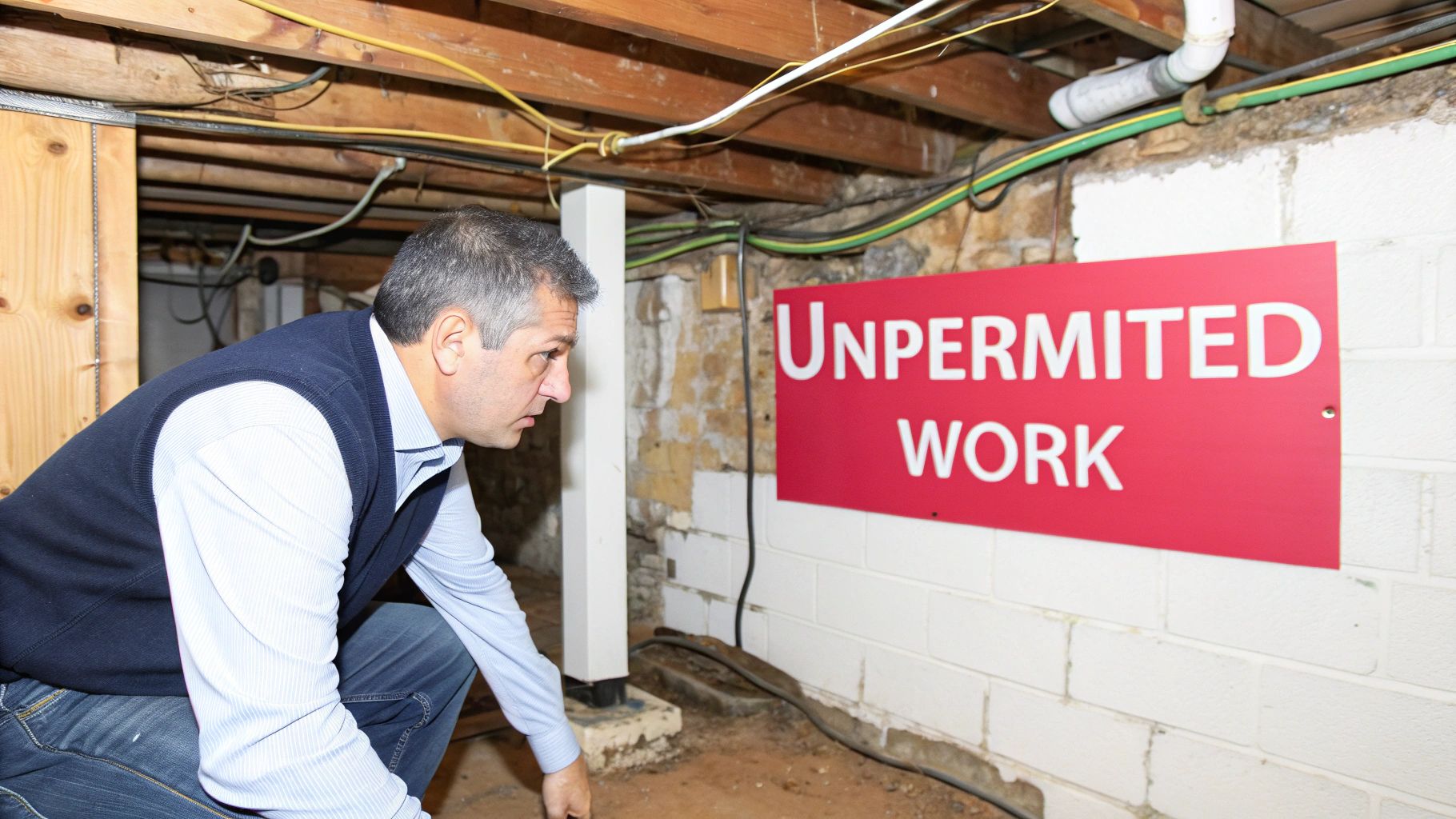
Many homeowners only discover these issues when a buyer's inspector flags them, often stemming from work done by previous owners or contractors who claimed "permits weren't needed." In 2026, with tighter lending standards, appraisers and inspectors are scrutinizing permit histories more closely than ever.
Here are some of the most frequent types of unpermitted work we see in the Cleveland area:
- Finished Basements: This is the number one issue. It's extremely common for basements in Cleveland, Bedford, and University Heights to be finished without permits for drywall, electrical, or plumbing.
- Bathroom and Bedroom Additions: Converting an attic into a bedroom or adding a bathroom in the basement without city approval is a frequent discovery.
- Kitchen Remodels: Moving plumbing stacks or adding new electrical circuits for appliances often happens without the required permits.
- Electrical and HVAC Upgrades: Replacing an electrical panel or installing a new furnace are common DIY or handyman jobs done off the books.
- Enclosed Porches & Garage Conversions: Turning a classic Cleveland three-season porch or a garage into living space requires permits but is often overlooked.
- Deck Additions: Many decks over a certain size were built without the necessary approvals.
Finding unpermitted work doesn't mean you can't sell. It simply means you need to choose the right strategy. Whether you're dealing with financial hardship, an inherited property, or are just ready to move on, there is a solution. If you need to sell my house fast Cleveland, understanding your options is the first step to a stress-free closing.
Understanding What Requires Permits in Cleveland

Navigating the rules of the City of Cleveland Division of Building and Housing can feel overwhelming. Many homeowners are caught off guard because the line between a simple cosmetic update and a project requiring a formal permit can be blurry.
The core reason for permits is safety. The city wants to ensure that any work affecting your home's structure, electrical, plumbing, or fire safety is done to code.
Work That ALWAYS Requires Permits in Cleveland
If your project involves the home's core systems, you can bet it needs a permit. These jobs require professional oversight and inspection to ensure they are safe for you and future owners.
- Structural Changes: Removing walls (especially load-bearing ones), adding rooms, or changing the roofline.
- Electrical Work: Anything beyond replacing a light switch or outlet. This includes panel upgrades, adding new circuits, or running new wiring.
- Plumbing Changes: Adding a new bathroom, moving fixtures like a sink or toilet, or replacing a water heater.
- HVAC Systems: Installing or replacing a furnace or air conditioning unit.
- Roofing: A full roof replacement typically requires a permit.
- Window or Door Enlargements: Changing the size of an opening that affects the home's structure.
- Additions: Any new room, enclosed porch, or deck over 200 square feet.
- Basement Finishing: Creating living space with walls, electrical, plumbing, or required egress windows.
- Garage Conversions: Turning a garage into a living area.
Work That May NOT Require Permits
Not every home improvement project is tangled in red tape. Many cosmetic updates and minor repairs are exempt.
- Cosmetic Updates: Painting, installing new flooring (carpet, tile, LVP), or replacing kitchen cabinets in the same layout.
- Like-for-Like Replacements: Swapping a broken faucet with a new one in the same location or replacing a toilet.
- Minor Repairs: Fixing a small section of drywall or repairing a leaky pipe.
- Small Decks: Decks under 200 square feet and less than 30 inches off the ground often don't need a permit.
- Fencing: Fences under 6 feet are usually exempt, but always check specific Cleveland or suburban zoning rules.
Permit records, especially for work done before 1990, can be incomplete. If you’re unsure, the safest bet is to assume a major project was done without permits if you can't find a record. For homeowners in this situation, sometimes the easiest path forward is to work with Cleveland cash home buyers who understand these complexities and can buy the property as-is.
How Unpermitted Work Affects Your Cleveland Home Sale
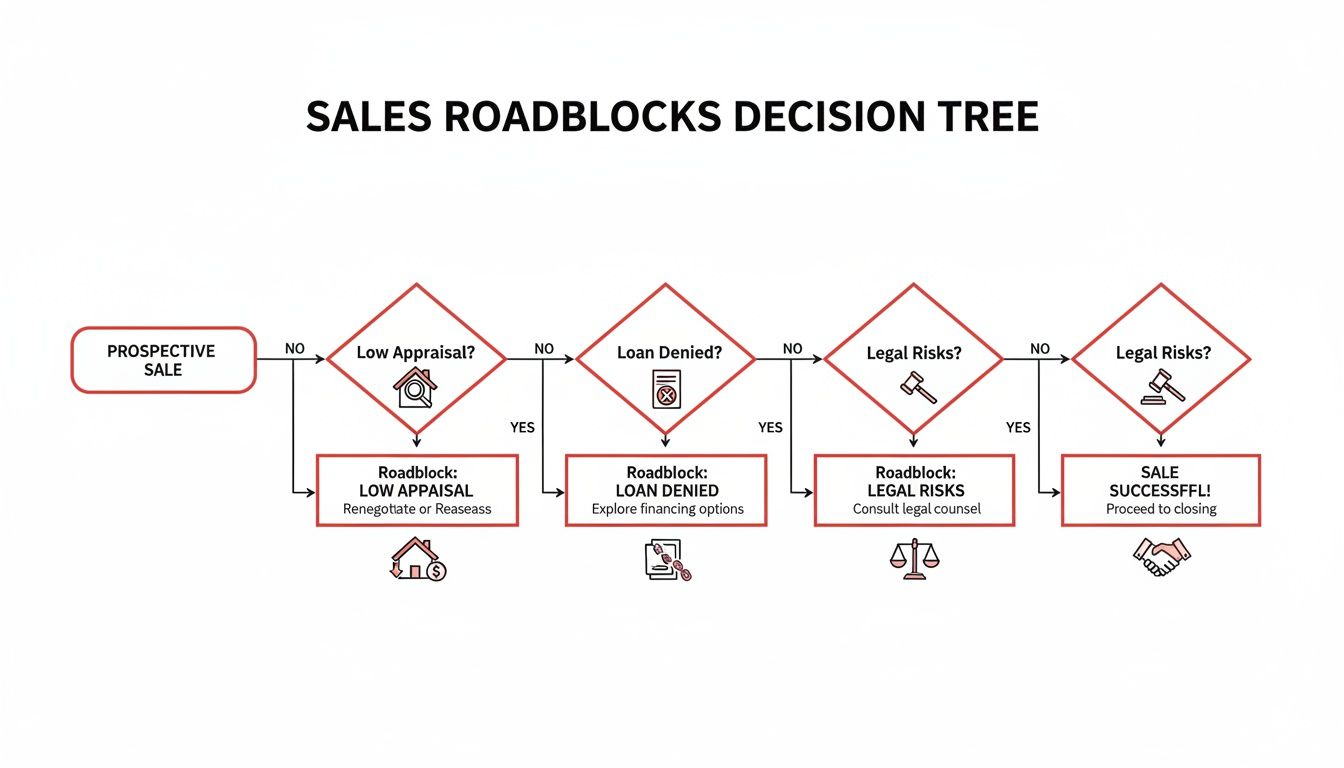
When you list a home with unpermitted work on the traditional market, what you see as a valuable improvement is viewed very differently by lenders, appraisers, and buyers. This is where a seemingly straightforward sale can quickly unravel.
Impact on Traditional Sale with Financing
The biggest hurdle is the buyer's mortgage. In the 2026 market, with interest rates around 6.3%, lenders are more risk-averse than ever.
- Appraisal Issues: An appraiser cannot legally include unpermitted additions in the home's official square footage. That beautiful finished basement may add zero value to the appraisal report, leading to a low valuation.
- Lender Refusal: Lenders may refuse to finance a property with significant unpermitted work, seeing it as a liability. If the appraisal comes in low, the buyer's loan amount is reduced, and the deal often collapses.
- FHA and VA Loans: These government-backed loans have strict safety standards. Unpermitted electrical work or a basement bedroom without proper egress is an automatic red flag, often requiring full remediation before the loan is approved.
- Conventional Loans: While there's more discretion, many banks will not proceed if major permit issues are discovered, fearing potential safety hazards and legal complications.
Impact on Property Value
Unpermitted work directly impacts your home's market value and what a buyer is willing to pay.
- Unpermitted Finished Basement: A $30,000 basement renovation might only be valued at $15,000 by the market because of the permit issue and the risk the new owner assumes. To an appraiser, it might be worth $0.
- Unpermitted Bedroom: A converted attic cannot be legally marketed as a bedroom, reducing your home's comparable value. This means you can't list it as a 4-bedroom home, which significantly affects the price.
- General Rule: Unpermitted work is often valued at 50-75% of what the same work with permits would be worth, due to the uncertainty and potential cost of remediation.
Disclosure Requirements in Ohio
This is a critical legal point. Ohio law (ORC 5302.30) requires sellers to disclose all known material defects on the Residential Property Disclosure Form. Unpermitted work is considered a material defect.
- You Must Disclose: You are legally obligated to disclose any unpermitted work you know about.
- Legal Liability: Failure to disclose can lead to a lawsuit from the buyer after the sale. They could sue for damages or even to have the sale rescinded.
- "I Didn't Know" Isn't a Strong Defense: While you can't disclose what you don't know, sellers are expected to have reasonable knowledge of their property. Hiding a known issue is never worth the risk.
Disclosing the issue protects you legally but will scare away many traditional buyers. This is a primary reason why sellers choose to sell house fast for cash Cleveland to an investor who accepts the property with full knowledge of the situation.
Options for Selling with Unpermitted Work
Facing a sale with permit issues can feel like you're out of good choices. But we're here to reassure you that you have several clear paths forward. Each comes with its own set of trade-offs in terms of time, cost, and stress. Let's break down the four main strategies for Cleveland homeowners.
Option 1: Obtain Retroactive Permits
This involves legalizing the work after the fact. You apply for permits, have the city inspect the work, and make any corrections required to bring it up to the current building code.
- Process: Hire licensed contractors, submit plans, pay fees, and schedule inspections.
- Timeline: This is not a quick fix. Expect 4-12 weeks at a minimum, and often much longer if significant corrections are needed.
- Costs: Permit fees ($100-$500+) are just the start. The real expense is in the corrections.
- Electrical: Adding GFCI outlets or upgrading a panel could cost $500-$3,000.
- Plumbing: Correcting vents or drains might run $500-$5,000.
- Egress: Adding a proper basement egress window is often $2,000-$5,000.
- Structural: An engineer's review and potential reinforcement can cost $1,000-$10,000+.
- Risk: The biggest risk is the unknown. An inspector may require you to open up walls, and all work must meet today's code, not the code from when the work was done.
- Best For: Sellers with minor permit issues, a flexible timeline, and a healthy budget for unexpected repairs.
Option 2: Sell "As-Is" on the Traditional Market
With this option, you list your home on the MLS, disclose the permit issues, and hope to find a buyer willing to take on the project.
- Process: Price your home accordingly and be transparent in the listing. Your target audience will mostly be investors or buyers paying with cash.
- Timeline: Be prepared for a long time on the market. Your pool of potential buyers will be significantly smaller.
- Price Impact: Expect offers to come in 10-20% below what the property would be worth with permits.
- Challenges: You'll likely face multiple financing fall-throughs, lowball offers, and deals that collapse during inspection. Most traditional buyers want a turnkey home, not a project with legal question marks.
Option 3: Remove the Unpermitted Work
This is the most drastic and rarely chosen option. It involves demolishing the unpermitted improvement and returning the space to its original, permitted condition.
- Example: Tearing out an unpermitted bathroom and capping the plumbing, or removing the drywall and framing from a finished basement.
- Costs: Demolition and restoration can easily cost $5,000-$20,000+, and you lose any value the improvement added.
- When It Makes Sense: This is usually a last resort, considered only if the work is unsafe or the cost to permit it is astronomically high.
Option 4: Sell Directly to a Cash Home Buyer
For most homeowners in Cleveland, Parma, or Garfield Heights dealing with this problem, this is the most certain and stress-free solution. Selling to a cash buyer like Home Sweet Home Offers eliminates the uncertainty.
- Process: We assess your property, including the unpermitted work, and make you a fair cash offer.
- Timeline: We can close in as little as 7-14 days, on your schedule.
- Benefits: No permit process, no repairs, no inspections, and no lender approvals to worry about. We handle everything.
- Ideal For: Sellers with significant unpermitted work, those who can't afford or don't want to deal with remediation, or anyone needing a fast, guaranteed sale.
When we buy houses Cleveland, we are buying the problem along with the property, giving you the freedom to move on without the burden.
Common Unpermitted Work Scenarios in Cleveland Homes
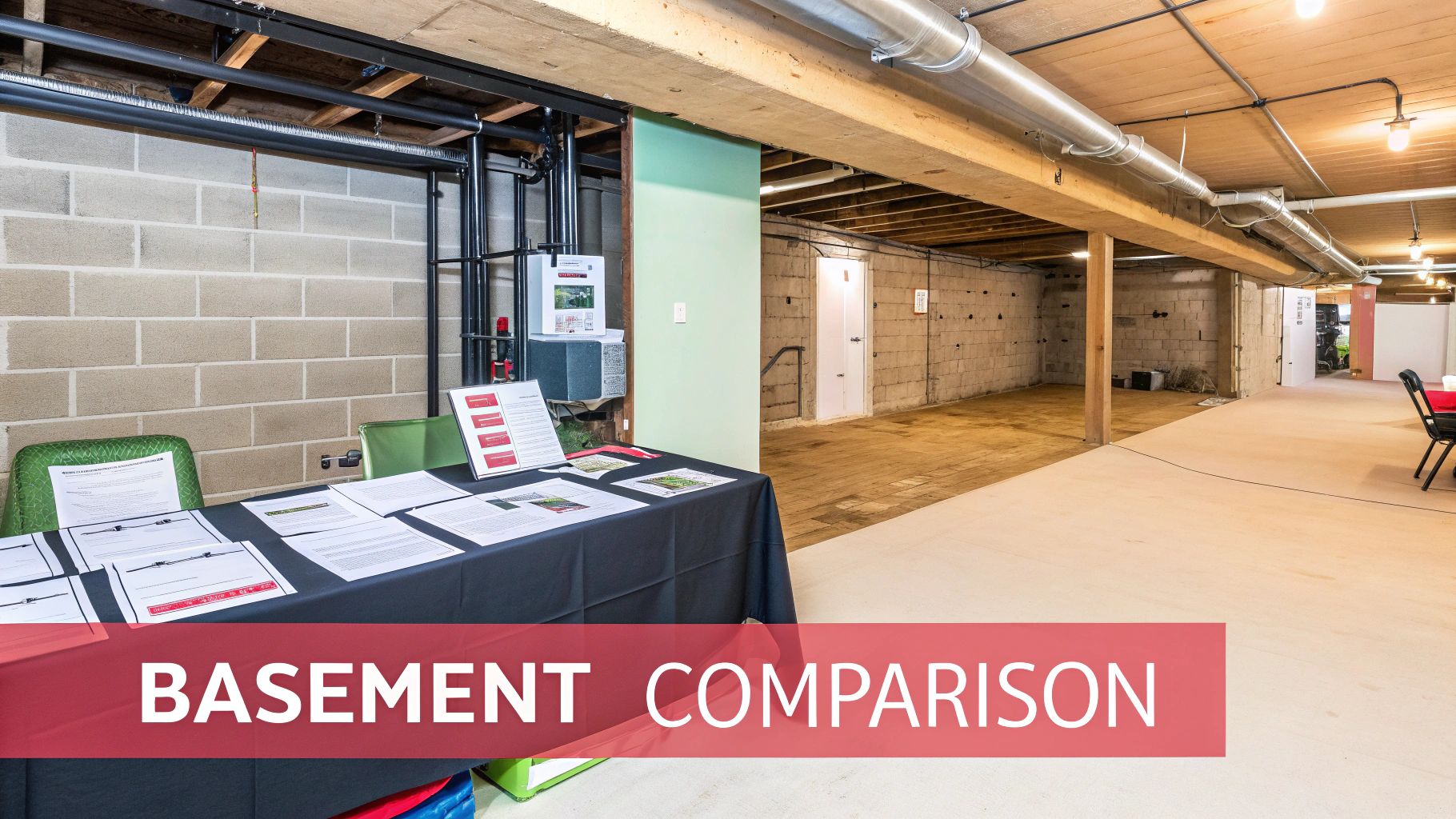
The specific type of unpermitted work in your home dictates the challenges you'll face. Here are some of the classic scenarios we see every day in Cleveland and its surrounding neighborhoods, and what they mean for your sale.
The Unpermitted Finished Basement
This is, by far, the most common permit issue in Northeast Ohio. It's estimated that over 60% of older finished basements lack proper permits.
- Typical Work: Drywall, a drop ceiling, carpet, and some basic electrical wiring. Often, a small bathroom has been added.
- Key Issues for Sale:
- Electrical Safety: Improperly wired outlets and lighting are a major fire hazard.
- Egress: Without a proper egress window, it cannot be considered legal living space, especially for a bedroom.
- Moisture: Lack of proper waterproofing can lead to mold and foundation issues.
- Retroactive Permit Costs: Permit fees of $300-$500 are just the beginning. Corrections for electrical, plumbing, and egress can average $3,000-$8,000.
- The Cash Buyer Solution: We buy the house as-is. We assess the risks and costs and make you an offer that lets you walk away without dealing with any of it.
The Attic Bedroom Conversion
In Cleveland's classic bungalows and colonials, converting the attic into a bedroom is a popular way to add space.
- Critical Issues:
- Egress: A proper, large-enough window for escape is required.
- Stairway: The stairs must meet code for rise, run, and width.
- Ceiling Height: A certain percentage of the room must meet minimum height requirements.
- Impact: Without permits, it can't be legally marketed as a bedroom, which significantly lowers your home's comparable value. An egress window alone can cost $2,500-$5,000 to install.
The Enclosed Porch or Garage Conversion
Many of Cleveland's front porches have been enclosed over the years to create a three-season room, and garages are sometimes converted into family rooms or apartments.
- Issues:
- Foundation: The original porch slab may not be adequate to support a full enclosure.
- HVAC: The home's heating system may be improperly extended, causing efficiency and safety problems.
- Insulation & Electrical: These are often inadequate for a true living space.
- Impact: This affects your property's official footprint and tax assessment. Retroactive permitting often requires an expensive engineering review ($500-$1,500). Reverting a garage conversion can cost $5,000-$15,000.
Electrical and Plumbing Updates
These "invisible" updates are often discovered during a buyer's inspection and can be major deal-breakers.
- Panel Upgrades: A surprisingly common DIY project with serious safety implications.
- Bathroom Additions: Both the plumbing and electrical work require separate permits.
- Kitchen Remodels: Moving gas lines for a stove or adding new circuits for appliances must be permitted.
If you're facing one of these situations, you're likely wondering how to sell a house that needs repairs. The answer is often to find a buyer who isn't afraid of the work.
The Retroactive Permit Process in Cleveland
If you decide to legalize the unpermitted work yourself, it's important to understand the step-by-step process. Be prepared: it's a marathon, not a sprint, and requires patience and a budget for unexpected costs.
Step 1: Research and Investigation
First, you need to know exactly what you're dealing with.
- Contact the City: Call the Cleveland Division of Building and Housing at (216) 664-2282.
- Request Permit History: Ask for all permit records for your property address.
- Compare to Reality: Walk through your home and compare the city's records to the actual condition of your house. This will reveal the gaps.
Step 2: Consult with Licensed Contractors
Before you even approach the city, get a professional opinion.
- Get an Assessment: Have licensed electricians, plumbers, and general contractors evaluate the unpermitted work.
- Identify Corrections: They can tell you what will likely be required to bring the work up to the 2026 building code.
- Obtain Estimates: Get written estimates for the cost of these corrections. This is crucial for deciding if this path is financially viable.
Step 3: Apply for the Permits
Once you have a plan, you can officially start the process.
- Submit Applications: You'll need to submit separate applications for each trade (building, electrical, plumbing, etc.).
- Pay Fees: Permit fees typically range from $100-$500 per permit. Be aware that some municipalities charge double for work that was done without a permit.
Step 4: The Inspection Process
This is the most nerve-wracking part of the process. An inspector will visit your home to evaluate the work.
- Provide Access: You may be required to open up walls, ceilings, or floors so the inspector can see the underlying work.
- Evaluation: The work will be judged against the current building code, not the code from when it was installed.
- Possible Outcomes:
- Approved As-Is: Very rare, but possible if the work was done exceptionally well.
- Approved with Corrections: The most common outcome. You'll receive a list of required fixes.
- Significant Remediation Required: If the work is old or of poor quality, major changes may be ordered.
Step 5: Corrections and Final Approval
After the initial inspection, you must complete all required corrections and have the work re-inspected.
- Complete the Work: Hire your contractors to make the fixes.
- Schedule Re-inspection: Have the inspector return to approve the corrections.
- Get Final Sign-Off: Once everything passes, you will receive a final approval or certificate of completion.
This entire process can take 2-4 months for simple issues and over 6 months for complex renovations. For many who need to sell my house fast Ohio, this timeline simply isn't an option.
Disclosure Obligations and Legal Liability
When selling a property in Ohio, honesty isn't just the best policy—it's the law. Understanding your legal obligations regarding disclosure is crucial to protecting yourself from future lawsuits.
What Ohio Law Requires
The Ohio Residential Property Disclosure Form is a mandatory document in most home sales. It requires you to be upfront about the condition of your property.
- Disclose Known Defects: You must disclose any known material defects, and unpermitted work falls squarely into this category.
- Specific Questions: The form specifically asks about building permits for major work. Answering untruthfully is a serious misrepresentation.
- Legal Protection: Honest and thorough disclosure is your best defense against a buyer claiming you hid problems from them.
What Happens If You Don't Disclose?
Trying to hide unpermitted work is a high-stakes gamble that can backfire years after you've sold the house.
- Lawsuits: A buyer who discovers the issue later can sue you. They might seek damages for the cost of repairs or, in extreme cases, sue for rescission to undo the entire sale.
- Statute of Limitations: In Ohio, buyers generally have several years to file claims for fraud or misrepresentation.
- High Costs: The legal fees to defend yourself can be enormous, often far exceeding what you might have lost by disclosing the issue upfront. Your real estate agent could also face liability.
How to Protect Yourself as a Seller
- Disclose, Disclose, Disclose: Be upfront about what you know in writing on the disclosure form.
- Consult an Attorney: Have a real estate attorney review your disclosure documents to ensure you are protected.
- Consider an As-Is Sale: The safest way to limit your liability is by selling house as is Cleveland to a cash buyer. These transactions often involve contracts where the buyer acknowledges the property's condition and waives future claims.
What If You Genuinely Didn't Know?
It's very common for sellers to be unaware of work done by previous owners. If this is your situation, be honest about that on the disclosure form. You can state that you have no knowledge of permits for work that predates your ownership. Documenting your lack of knowledge is key.
Cost Comparison: Remediation vs. Selling As-Is
Numbers don't lie. Let's walk through a realistic scenario for a typical Cleveland home with a common problem: an unpermitted finished basement that includes a small bathroom. We'll compare the net financial outcome of fixing it versus selling it as-is to a cash buyer.
Scenario: Cleveland Home with Unpermitted Finished Basement and Bathroom. Market value with permits is estimated at $185,000.
Option A: Remediate and Sell on the Traditional Market
You decide to tackle the permit process to maximize your sale price.
- Permit Fees: $400
- Electrical Corrections (add GFCIs, fix grounding): $2,500
- Plumbing Corrections (fix improper venting): $1,800
- Egress Window Installation (to make it legal living space): $4,000
- Total Remediation Cost: $8,700
- Time on Market & Repairs: 3-4 months
Financial Breakdown:
- Market Sale Price: $185,000
- Less Remediation Costs: -$8,700
- Less Agent Commission (6%): -$11,100
- Approximate Net Proceeds: ~$165,200 (before carrying costs)
Option C: Sell As-Is to a Cash Buyer
You decide to skip the hassle and sell directly to Home Sweet Home Offers.
- Timeline to Close: 2 weeks
- Remediation Costs: $0
- Agent Commissions: $0
- Cash Offer: We evaluate the property and make a fair offer of $155,000.
Financial Breakdown:
- Cash Offer Price: $155,000
- Net Proceeds: $155,000
The Key Takeaway
At first glance, the traditional sale seems to net about $10,000 more. But that doesn't account for the hidden costs. During the 3-4 months it takes to remediate and sell, you're still paying the mortgage, taxes, and insurance. These carrying costs could easily eat up another $4,000-$6,000 of your profit.
Factoring in the time, stress, and financial risk of unexpected repair costs, the certainty of a cash sale becomes much more appealing. When you need to sell my house fast for cash, the net result is often very similar, but without months of uncertainty.
Cleveland Neighborhoods and Permit Enforcement Patterns
Permit awareness and enforcement can vary across Cleveland and its inner-ring suburbs. Understanding these local nuances can help you anticipate potential issues when you sell.
- West Side (Lakewood, West Park, Kamm's Corners): In these areas, buyer and appraiser scrutiny is generally higher. Buyers are more educated about permits, and lenders are stricter due to higher property values.
- East Side (Collinwood, Euclid, University Heights): Historically, some of these neighborhoods have seen less rigorous enforcement, meaning older unpermitted work is very common.
- Near West (Tremont, Ohio City, Detroit Shoreway): With the renovation boom in these hot neighborhoods, permit awareness is extremely high. Any unpermitted work will be a major red flag for buyers.
- South Side (Old Brooklyn, Brooklyn Centre): A mix of older homes with decades of unpermitted improvements. It's a very common issue here.
- Inner Suburbs (Parma, Brook Park, Garfield Heights): Each suburb has its own building department and rules. Parma, for example, has a reputation for being diligent with inspections and code enforcement.
Navigating these different municipal requirements can be a headache. A professional cash buyer like Home Sweet Home Offers has experience working with all of these local departments, including those in Lorain and Elyria, and can manage the process seamlessly after the purchase. This is a key advantage when dealing with Parma Ohio real estate or properties in any surrounding city.
Why Cleveland Homeowners Choose Cash Buyers for Permit Issues
When faced with the uncertainty, cost, and time required to fix unpermitted work, many Cleveland homeowners realize that a direct cash sale is the most logical and beneficial solution. It’s about choosing a path of certainty over a path of risk.
Here’s why selling to a cash buyer is often the smartest move:
- No Permit Remediation Required: You sell your property exactly as it is today. We take on the responsibility of dealing with the city and the corrections.
- No Inspection Contingencies: Our offers are not contingent on a third-party inspection. We do our own assessment and that's it.
- No Financing Fall-Through: This is the #1 reason traditional sales with permit issues collapse. Because we use our own cash, our offer is guaranteed.
- A Transparent Process: Our cash offer is based on the home's as-is condition. The price we offer is the price you get. No surprises before closing.
- Speed and Certainty: You can close in as little as 7-14 days, not months. This is crucial if you're in a time-sensitive situation like a relocation, divorce, or avoiding foreclosure.
- Major Cost Savings: You pay zero for permit fees, contractor bills, agent commissions, or closing costs. You also save on months of carrying costs.
- Privacy and Peace of Mind: You avoid the stress of municipal scrutiny, multiple inspections, and the potential for a sale to fall apart at the last minute.
Cash home buyers Cleveland are experts in handling complex situations. Whether it’s a finished basement in Maple Heights or a converted garage in Bedford, our process remains simple, fast, and reliable.
Get Your Fair Cash Offer Today
Do you have unpermitted work in your Cleveland area home? Instead of spending months and thousands of dollars on a risky permit process, you can get a fair cash offer and close in as little as one week.
Home Sweet Home Offers purchases properties with all types of permit and code violation issues, including:
- Finished basements without permits
- Unpermitted bathroom or bedroom additions
- Garage conversions and enclosed porches
- Electrical and plumbing work done without permits
- Any other unpermitted improvements
There is no need to apply for retroactive permits or deal with city inspectors. You won't face code compliance requirements or the risk of discovering more problems and costs. You choose your closing date. As an Ohio-based company, we are experts in Cleveland's unique housing market and building requirements.
Take the first step towards a stress-free sale.
Call 216-200-8010 or get a cash offer online for your free, no-obligation quote. Let us help you move forward. You can also contact us with any questions.