

Receiving an official notice about a tax delinquency can make your stomach drop. It’s an overwhelming moment, but understanding what’s happening is the first step toward getting back in control of your situation. If you’re a Cleveland homeowner, please know that you have options, and we’re here to help you understand them.
So, what is a Cleveland tax lien sale? It’s not an eviction notice, but it is a serious step. It's the process where Cuyahoga County sells your overdue property tax debt to a private investor. This move places a high-interest claim—a lien—against your home. Suddenly, you owe the investor, not the county, and the pressure starts to mount.
What a Cleveland Tax Lien Sale Really Means for You
If you're in this boat, you are not alone. Thousands of your neighbors across Cleveland, Parma, and Lakewood are facing the same struggle. Life happens. A sudden job loss in the family, a pile of medical bills from an unexpected illness, or major home repairs you can't afford can throw anyone’s finances into chaos, making it impossible to keep up with property taxes.
When you fall behind, the county isn't actually interested in taking your home. What it needs is the tax revenue to fund schools, roads, and emergency services for our communities. To get that cash flow moving again, it holds a tax lien sale, essentially letting an investor pay your overdue bill.
The Shift from County Debt to Private Debt
Think of it like the county selling your "IOU" to a third party. Now, that investor has the legal right to collect the debt from you, but they get to add some pretty hefty charges on top.
They can tack on interest—often as high as 18% annually—plus their own legal fees and collection costs.
This is where the real pressure begins. You're no longer dealing with a government agency that may have flexible payment options. You’re now on the hook with a for-profit investor whose only goal is to get their money back, plus a big return. Their ultimate leverage? The power to file a foreclosure lawsuit if you can't pay up.
The current economic climate has only made things tougher in our area. Cuyahoga County has seen a huge spike in property tax delinquencies, which means these sales are happening more often. You can dig into the local trends and see what it means for homeowners like you.
To get a handle on the process, you'll need to know the lingo. These aren't just words on a page; they're concepts that directly impact your rights and the future of your home.
Key Terms in a Cleveland Tax Lien Sale
| Term | What It Means for a Homeowner |
|---|---|
| Tax Lien | This is the legal claim the county (and later, the investor) has on your property because of unpaid taxes. It’s like a hold on your house until the debt is paid. |
| Tax Lien Certificate | The official document the investor buys. It gives them the right to collect your tax debt, plus interest and fees. |
| Delinquency | The status of your property taxes once they are past due. This is the trigger that starts the whole tax lien process. |
| Redemption Period | A critical window of time—one year in Ohio—after the lien is sold. During this period, you have the legal right to pay off the full amount (debt, interest, fees) and "redeem" your property, clearing the lien. |
| Foreclosure | The legal action the investor can take if you don’t pay off the lien within the redemption period. If they win, they can force the sale of your home to get their money back. |
Understanding these terms is your first line of defense. They define the battlefield and the rules of engagement.
You Still Have Options
Even after a tax lien is sold, you have not lost your home. Ohio law gives you a critical safety net called the "Right of Redemption." This provides a one-year window to pay what you owe and save your property.
But the clock is ticking, and with that 18% interest, the amount you owe is growing every day. It’s a stressful spot to be in, whether you live in Garfield Heights, Euclid, or University Heights. This isn't just a financial problem; it’s a deeply personal crisis that affects your family and your future.
The good news? You’re not powerless. Proactive solutions exist, and taking a clear step like selling your home for cash can resolve the debt and stop a foreclosure in its tracks.
Cracking the Code: How the Cuyahoga County Tax Lien Process Actually Works
We understand. The idea of losing your home over back taxes is terrifying. But knowing how the system works is the first step to taking back control. It might feel like a complicated mess, but the path from a delinquent bill to a potential foreclosure follows a pretty clear timeline here in Cuyahoga County. Knowing the stages gives you the power to act before things spiral out of control.
The whole thing kicks off the second your property taxes become delinquent. The county's first goal isn't to snatch your property; it's to collect the money needed to fund schools, roads, and services in communities from Cleveland to Bedford. When that doesn't happen, they have a system to sell off that tax debt.
Stage 1: The Delinquency Notice
The first official sign of trouble is a formal notice that shows up in your mailbox. This isn't just another bill—it's a legal warning shot telling you your property is at risk. It will break down exactly what you owe, including the penalties and interest that have already started piling up.
We can't stress this enough: make absolutely sure the county has your correct mailing address. Missing this notice doesn't stop the process, but it can rob you of precious time to find a solution.
Stage 2: Public Advertisement and the Sale List
If the bill still isn't paid, the county gears up to sell the lien. This is when your property lands on a list of delinquent properties, which often gets published in a local newspaper or online.
This public posting serves two purposes: it's a final heads-up to you and an open invitation to potential investors. For homeowners in places like Maple Heights, seeing your address on a public list is a gut punch. It’s the moment a private problem becomes very, very public.
At this point, it’s critical to remember what’s actually being sold: it’s the debt on your property, not the property itself. You still own your home. The county is just handing over the right to collect that debt to someone else.
Stage 3: The Tax Lien Auction
Next up is the auction. This is where private investors—from large firms to smaller local players—bid to buy the tax lien certificates. The winner pays your overdue tax bill to the county, and in exchange, they get the certificate.
This piece of paper is a powerful legal document that gives the investor the right to collect the original tax amount from you, plus a painfully high interest rate (up to 18% a year here in Ohio) and any legal fees they rack up along the way.
Why Investors Are Lining Up to Buy Cleveland Tax Liens
To navigate this, it helps to understand what you're up against. Investors see your delinquent tax bill as a golden opportunity. Their main goal is to make a profit, and they have two ways to do it:
- Cashing in on the High Interest: The best-case scenario for most investors is that you "redeem" the property. That means you pay them back everything they paid the county, plus that massive 18% interest. For them, it's a secure, high-return investment backed by your home.
- Foreclosing and Taking the Property: If you can't pay them back, they have a Plan B: start a foreclosure lawsuit. This allows them to potentially acquire your property for just pennies on the dollar compared to its real market value.
This dual-profit model is exactly why their collection tactics can feel so ruthless. Once that lien is sold, you're not dealing with the Cuyahoga County Treasurer anymore. You're up against a private company whose entire business model is built around your financial hardship. This is precisely why a quick home sale in Cleveland can shift from a last resort to a smart, strategic move to settle the debt on your own terms.
When a Private Investor Owns Your Tax Debt
Once your tax lien is sold at auction, the entire game changes. You’re no longer dealing with Cuyahoga County, a government body with departments you can call. Suddenly, you owe money to a private, for-profit investor whose only motivation is financial.
It’s a jarring shift. For homeowners in Cleveland and surrounding cities like Maple Heights or Lorain, it can feel incredibly personal and intimidating.
The investor's goal is simple: collect what they're owed and profit from their investment. That tax lien certificate they hold is a powerful legal weapon, giving them immense leverage over you and your property. Their business model is built on your financial hardship, and they have a clear, legal path to profit from it.
The Investor’s Power Play: High Interest and Mounting Fees
The first thing you'll feel is the financial pinch. Ohio law gives investors the green light to charge up to 18% annual interest on the total amount of the lien. This isn't your average credit card rate; it's a punishingly high number designed to put immense pressure on homeowners to pay up fast.
But that’s just the start. The investor can also pile on other costs, adding them to your debt:
- Attorney Fees: If they bring in a lawyer to handle collections or start the foreclosure process, you're on the hook for those bills.
- Administrative Costs: This can cover anything from title searches to sending notices and other expenses they rack up.
What began as a manageable tax bill can quickly spiral into an overwhelming debt. A few thousand dollars can swell by hundreds, or even thousands, more over the one-year redemption period.
This infographic shows the simple flow from receiving a notice to the auction where an investor gets involved.
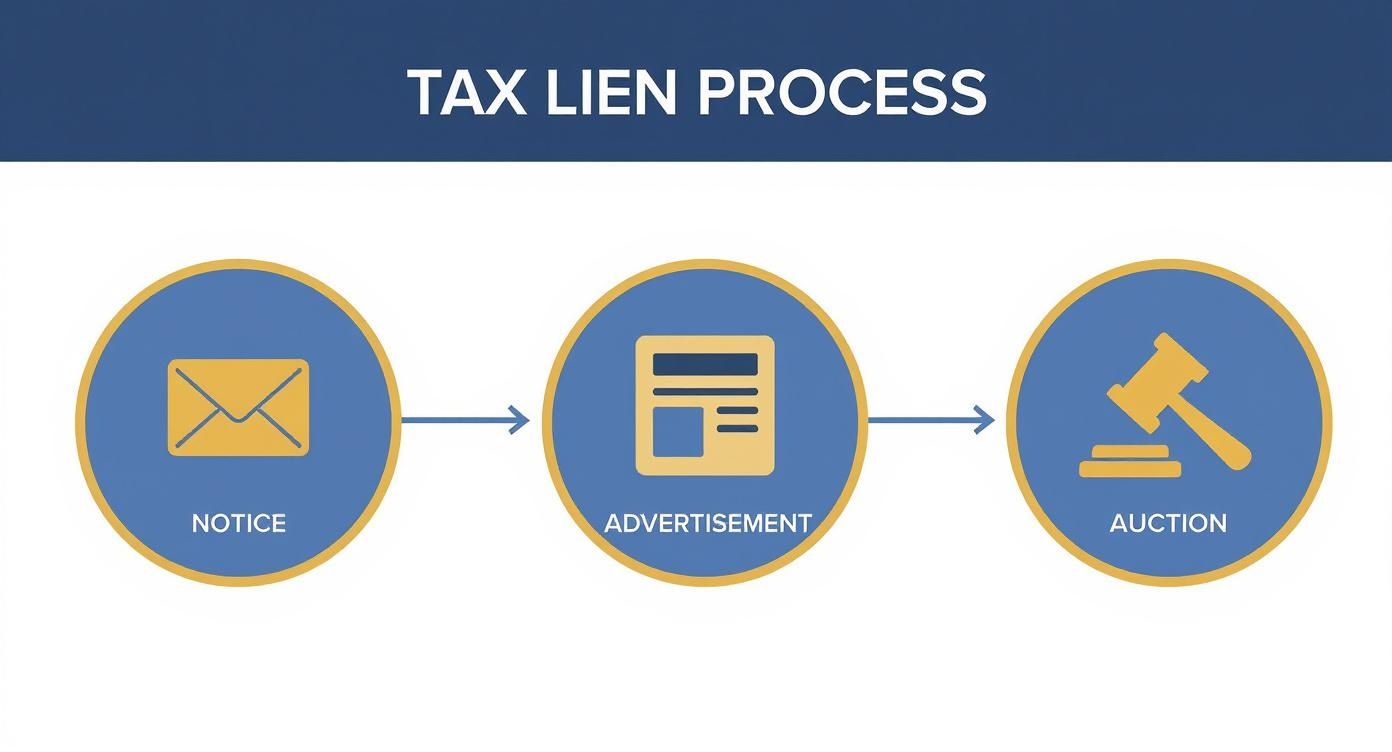
Each step of this process pulls you further away from the county and pushes you closer to a direct showdown with a private investor.
The Ultimate Threat: Foreclosure
The investor's trump card is the threat of foreclosure. If you can't scrape together the full amount—the original tax debt, the crushing 18% interest, and all the added fees—before that one-year redemption clock runs out, the investor can file a foreclosure lawsuit.
If the investor wins in court, a judge can order your home to be sold at a sheriff's auction. The money from that sale pays the investor first. This is their endgame, and it’s a terrifying reality that puts families in Garfield Heights, Elyria, and Bedford under enormous stress.
To get inside their heads, it’s helpful to understand how investors find distressed properties. It pulls back the curtain on a calculated business strategy where your home is just another asset on a spreadsheet.
Facing this kind of pressure, it's easy to feel trapped. But you still have options. The key is to act before the redemption period expires. Selling your home for cash to a trusted buyer like Home Sweet Home Offers gives you a direct path to settling the debt. We can make a fast cash offer in Cleveland, allowing you to pay off the investor in full, dodge a foreclosure on your record, and walk away with your finances—and your future—intact.
Using Your Right of Redemption to Save Your Home
Even after a private investor has bought your tax lien, all is not lost. Ohio law provides a powerful legal safety net for homeowners called the Right of Redemption. Think of it as a crucial, final window of opportunity. Understanding exactly how it works is your best defense against losing your home.
The Right of Redemption is essentially a one-year grace period. From the moment the investor buys the lien certificate, a clock starts ticking. You have exactly one year to pay back the entire debt and reclaim your property, free and clear.
This right is your most powerful tool, but it's also your last chance to act before the investor can legally start the foreclosure process. For homeowners in Cleveland, Parma, or Lakewood, this one-year period is both a blessing and a frantic race against time.
What It Takes to Redeem Your Property
"Redeeming" your property isn't as simple as just paying the original overdue tax bill. To legally clear the lien, you have to pay the investor the total redemption amount.
That total figure includes:
- The Original Delinquent Tax Amount: This is the base amount the investor paid Cuyahoga County.
- Accrued Interest: The investor can charge up to a staggering 18% annual interest on the lien amount.
- Penalties and Fees: Any additional penalties from the original tax delinquency are rolled into the total.
- The Investor’s Legal Costs: You are also on the hook for reimbursing the investor for their attorney fees and other administrative costs.
A manageable tax bill can quickly balloon into an overwhelming sum once that high interest rate and the investor's legal fees are tacked on. The system is designed to strongly favor the investor.
The Escalating Costs: A Real-World Look
Let's walk through a realistic example. This is a situation that families in places like Garfield Heights or Euclid could easily face.
Here’s a sample breakdown of how an initial tax debt can swell over the one-year redemption period.
Estimated Redemption Cost Breakdown (Example)
| Cost Component | Example Amount |
|---|---|
| Initial Delinquent Tax Bill | $4,000 |
| 18% Annual Interest After One Year | + $720 |
| Investor’s Attorney & Filing Fees | + $1,500 |
| Total Redemption Cost After 1 Year | $6,220 |
As you can see, a $4,000 problem has grown by more than 50% in just twelve months. This is exactly why waiting until the last minute is so dangerous; the financial goalpost just keeps moving further away.
Common Hurdles in the Redemption Process
Unfortunately, simply having the desire to pay isn't always enough. Homeowners often run into frustrating roadblocks during the redemption period. You might get into disputes over the final payoff amount, with investors sometimes adding questionable fees to the total.
Other times, the most basic challenge is just getting in touch with the investor or their attorney to get a clear, final number. These kinds of delays can eat up precious time you just don't have.
The Right of Redemption gives you a legal pathway to save your home, but it demands financial urgency. The longer you wait, the more expensive it becomes to resolve the lien and avoid foreclosure.
If you’re watching the calendar and worried about the escalating costs, you are not out of options. For many Cleveland homeowners, the most direct solution is to take control. You can learn more about how to sell your house fast in Cleveland to unlock your home's equity. This can provide the cash needed to pay off the investor in full, letting you walk away without the long-term damage of a foreclosure.
How Tax Lien Sales Impact Cleveland Neighborhoods
A tax lien sale isn't just a personal financial problem—it sends shockwaves through an entire community. When a single home in a Cleveland neighborhood gets tangled in a tax lien foreclosure, it doesn't happen in a bubble. The fallout can shake the stability, safety, and even the value of every other house on the block.
For neighborhoods across Cuyahoga County, from Bedford to University Heights, the end result of a tax lien foreclosure is almost always the same: a vacant, neglected property. An empty house is a magnet for trouble, becoming a target for vandalism and other headaches that fuel neighborhood blight. This is a gut punch to the morale of residents who work hard to maintain their homes and streets.
The Financial Ripple Effect
The damage isn't just cosmetic; it hits your wallet. When one house falls into disrepair, it has a nasty habit of dragging down the value of every home around it. This is a huge deal for homeowners who see their property not just as a place to live, but as their single biggest financial asset.
This isn't just a hunch. Research from the Federal Reserve Bank of Cleveland confirmed this painful truth. Their analysis found that a nearby vacant or tax-delinquent property can knock the selling price of neighboring homes down significantly.
It kicks off a nasty domino effect:
- Your Property Value Takes a Hit: Your home’s market value is tied to the health of your neighborhood. A blighted property next door makes it tougher to sell for what your home is worth.
- The City’s Budget Shrinks: As property values drop, the city collects less tax revenue. That can mean painful cuts to essential services like road repairs, police patrols, and park upkeep.
- Out-of-Town Investors Let It Rot: Sometimes, the investors who buy these properties have no intention of fixing them up. They just sit on the property, while the house slowly falls apart and becomes an eyesore.
Protecting Your Community Starts at Your Front Door
This is why finding a solution before a tax lien turns into a foreclosure is so critical. It’s not just about one family's hardship; it quickly becomes everyone's problem. By tackling the tax debt head-on, you're not just saving your own home—you're doing your part to preserve the stability of your entire neighborhood.
For homeowners in Cleveland, Euclid, or Lakewood feeling this pressure, selling your home to a trusted cash buyer can be a responsible way out of a tough situation. It stops another house from sitting empty. Instead, the property is quickly passed to a new owner who can actually care for it. Home Sweet Home Offers provides a fast, guaranteed way to resolve your tax lien, protecting both your own financial future and the well-being of the community you call home.
Finding a Proactive Path Away from Foreclosure

Watching the clock tick down on your one-year redemption period can feel completely paralyzing. We get it. The stress and uncertainty of facing a potential foreclosure are overwhelming, and you might feel like your options are shrinking by the day.
But now is the time to be proactive. Taking decisive action is your best bet for protecting your home and your financial future.
Many homeowners first turn to the county for help, but the truth is, while Cuyahoga County does have programs, they are often limited and might not offer the immediate relief you need to stop an investor's foreclosure.
This leaves you in a tough spot. Waiting on a payment plan probably won't be enough to satisfy a determined investor. When you need certainty and speed, it's time to look at a different path—one that puts you back in control.
The Cash Sale Solution: A Strategic Alternative
The most powerful way to resolve a tax lien and stop a foreclosure is to wipe out the debt entirely. For many homeowners in Cleveland, Parma, and Lakewood, selling their property is the most direct way to do just that. It gives you the funds to pay the investor in full, satisfying their claim and stopping any legal action cold.
A traditional home sale, with its long timelines and repair demands, often isn't an option when a redemption deadline is looming.
This is where selling to a trusted cash home buyer like Home Sweet Home Offers becomes a game-changer. It's a solution built for homeowners who need a guaranteed outcome without the usual headaches. Understanding the ins and outs of selling your home quickly is a crucial proactive step.
Regaining Control with a Fast Cash Offer
Choosing to sell your house fast in Cleveland is about taking back the reins. It's a proactive decision that lets you settle the debt on your terms, not an investor’s.
Here’s how this approach gives you immediate relief:
- Certainty: A cash offer is a sure thing. You know exactly how much you'll get and when, cutting through the guesswork of the traditional market.
- Speed: We can close the deal in a matter of weeks, not months. That speed is critical to paying off the investor before your redemption period runs out.
- No Repairs Needed: We are cash home buyers in Cleveland who buy houses as-is. You won’t have to spend a dime on costly repairs or deal with showings.
- No Commissions or Fees: A typical sale can cost you 6% or more in realtor commissions. With us, you pay zero agent fees, meaning you keep more of your home's equity.
A cash sale isn't just about selling a house; it's about buying your freedom. It gives you the funds to wipe the slate clean, avoid the long-term credit damage of a foreclosure, and move forward with peace of mind.
If you’re facing a tax lien, you have more power than you think. Our guide on what to do if you’re facing foreclosure in Cleveland dives deeper into your options.
Don't let an investor dictate your future. Contact Home Sweet Home Offers today for a free, no-obligation cash offer and find a clear path away from foreclosure.
Common Questions About Cleveland Tax Lien Sales
Going through a tax lien sale brings up a ton of urgent questions. When you're feeling that kind of pressure, you need straight answers. We've put together some of the most common worries we hear from homeowners across Cuyahoga County to give you the clarity you need.
Can I Pay the County After My Tax Lien Is Sold?
Unfortunately, once the lien is sold, that ship has sailed. As soon as Cuyahoga County sells that tax lien certificate to a private investor, your debt officially changes hands. From that moment on, all your communication and payments have to go directly to the new investor or their attorney.
Your only goal now should be to contact the investor, find out the full "redemption amount" (which includes the original taxes, interest, penalties, and legal fees), and settle up with them.
Will a Tax Lien Sale Hurt My Credit Score?
This is a bit of a "yes and no" answer. The tax lien itself is a public record, but it usually doesn't get reported directly to the big credit bureaus. However, the chain of events that can follow the sale can absolutely wreck your credit.
If the investor decides to foreclose and gets a judgment against you, that foreclosure will be a massive black mark on your credit report for up to seven years. A foreclosure makes it much harder to get a car loan, secure a new mortgage, or even rent an apartment.
What if My House Is Worth Less Than What I Owe?
This is a gut-wrenching spot to be in, often called being "underwater." It happens when the total cost to redeem your home—the original tax bill, the brutal 18% interest, plus mounting legal fees—balloons to more than your home is actually worth.
For a homeowner in this situation, selling might feel counterintuitive, but it's often the smartest way out. You may not walk away with a big check, but you can pay off the debt and—most importantly—sidestep a foreclosure that will haunt your financial record for years. It’s worth learning more about how you can sell a house as-is even with these challenges.
How Quickly Can a Cash Buyer Help Me?
In these situations, speed is your best friend. This is exactly what we specialize in. At Home Sweet Home Offers, we can typically give you a fair, no-strings-attached cash offer within 24 hours after we see your property.
If you like the offer, we can often close the entire sale in just a few weeks. That kind of speed is a game-changer when you're up against a redemption deadline. It gives you the cash and the certainty you need to pay off that investor and put the threat of foreclosure behind you for good.
Facing a tax lien can feel like you're completely on your own, but you don't have to be. The single most important thing you can do is act quickly. If you're losing sleep over that redemption deadline and need a solution you can count on, Home Sweet Home Offers is here to help. We give Cleveland homeowners a fast, dependable, and stress-free path to resolving tax debts so they can finally move forward.