
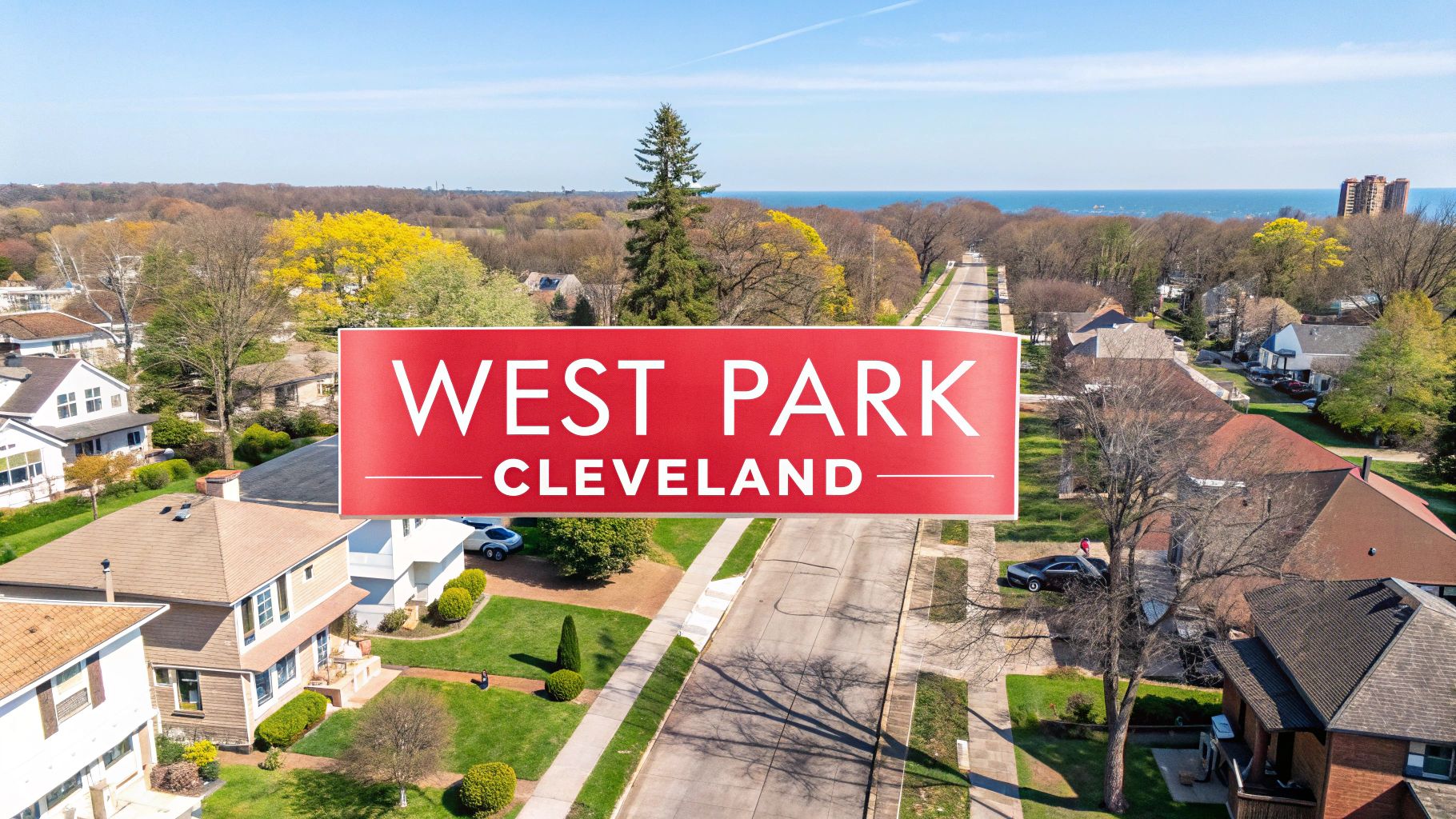
If you're a homeowner in West Park, you already know the unique appeal of this neighborhood. It's Cleveland’s largest, but it has a distinct suburban feel that sets it apart. From the bustling community hub at Kamm’s Corner to the quiet, tree-lined streets of Jefferson, West Park is a place built on stability and pride. For many homeowners, this is the community where you've raised a family, built equity, and created lasting memories. But we also understand that life changes, and what worked for you years ago may not be the right fit today.
This guide is designed for you—the West Park homeowner. Whether you're considering downsizing, dealing with an inherited property, or simply tired of the constant upkeep an older home requires, we'll provide a transparent look at the lifestyle, history, and real estate realities of this community. We'll explore what makes West Park so desirable while also addressing the challenges you might face when it's time to sell.
The charm of our classic homes is undeniable, but it often comes with a long to-do list of repairs and updates. If you're weighing your options and wondering how to move forward without the stress and expense of a traditional listing, you're in the right place. We're here to show you a simpler path.
For homeowners who are curious about their home's current value or what a fast, no-obligation "as-is" cash offer might look like, we're here to provide clear, straightforward answers.
The History of West Park
To understand the pride West Park homeowners have, you have to look back at its roots. It wasn't always just another Cleveland neighborhood. For decades, it stood as its own independent village, a quiet community first established by settlers like its namesake, John West. This history of self-reliance is the foundation of the neighborhood's unique, almost suburban character that still defines it today.
That independent spirit officially became part of Cleveland's story in 1923. As the very last village to be annexed into the city, West Park held onto its small-town identity, a trait that makes it feel different from other parts of Cleveland. The neighborhood even celebrated its centennial recently, marking 100 years as a cornerstone Cleveland community. You can learn more about West Park's centennial celebration and its journey.
In the early 20th century, West Park became a landing spot for hardworking Irish, German, and Eastern European immigrant families. They built the churches, schools, and community organizations that remain the pillars of the neighborhood. Their focus on family and stability created a powerful legacy of long-term residency and pride in homeownership that you can still see on every street.
The biggest transformation, however, came after World War II. The post-war boom led to the construction of hundreds of the charming bungalows, classic colonials, and spacious ranch homes that define the area. This building spree cemented West Park’s reputation as a family-first suburb tucked right inside the city. For anyone who owns a home here, this history is visible in the very bones of their property—solid, well-built houses that have sheltered generations of Cleveland families.
How West Park Is Organized: A Breakdown of Sub-Neighborhoods
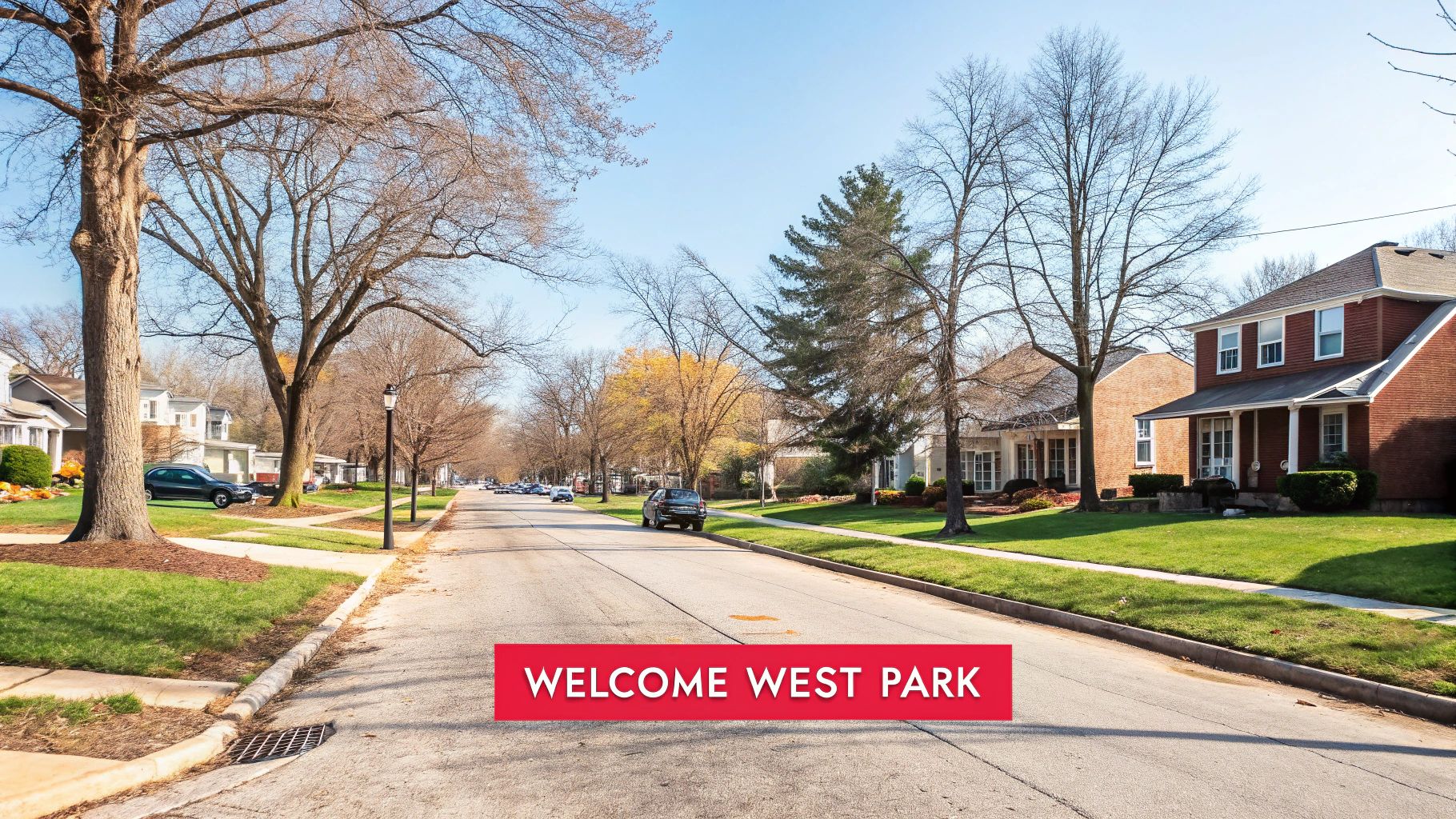
While many think of West Park as one large community, it’s really a mosaic of four distinct sub-neighborhoods. Each area offers a different lifestyle, housing stock, and price point. As a homeowner, understanding these nuances is critical when evaluating your property’s value and the type of buyer it might attract.
A. Kamm’s Corner
Kamm's Corner is the undeniable heart of West Park. Centered around the intersection of Lorain Avenue and Rocky River Drive, it's the area's primary dining, shopping, and social hub. Known for its safety and walkable suburban feel, homes here are highly sought after by buyers looking for convenience and a strong sense of community.
B. Jefferson
Just south of Kamm’s Corner, the Jefferson neighborhood offers a quieter, more traditionally residential experience. Its peaceful, tree-lined streets are dominated by well-kept single-family homes, making it a top choice for families. The atmosphere is calm, stable, and deeply rooted in a classic suburban lifestyle.
C. Bellaire-Puritas
This area is known for its affordability and accessibility. With easy access to major highways like I-71 and I-480, Bellaire-Puritas appeals to commuters, first-time homebuyers, and real estate investors. It offers some of the most budget-friendly housing in West Park and has strong rental opportunities, making it a practical choice for many.
D. Hopkins
Located adjacent to Cleveland Hopkins International Airport, the Hopkins neighborhood is a unique mix of residential streets and industrial properties. It’s an unbeatable location for airport employees or buyers seeking maximum affordability. While different from the rest of West Park, it provides an accessible entry point into the Cleveland real estate market.
Each of these sub-neighborhoods attracts a different buyer profile, which directly impacts everything from your home's asking price to how quickly you can expect to sell.
What West Park Is Known For
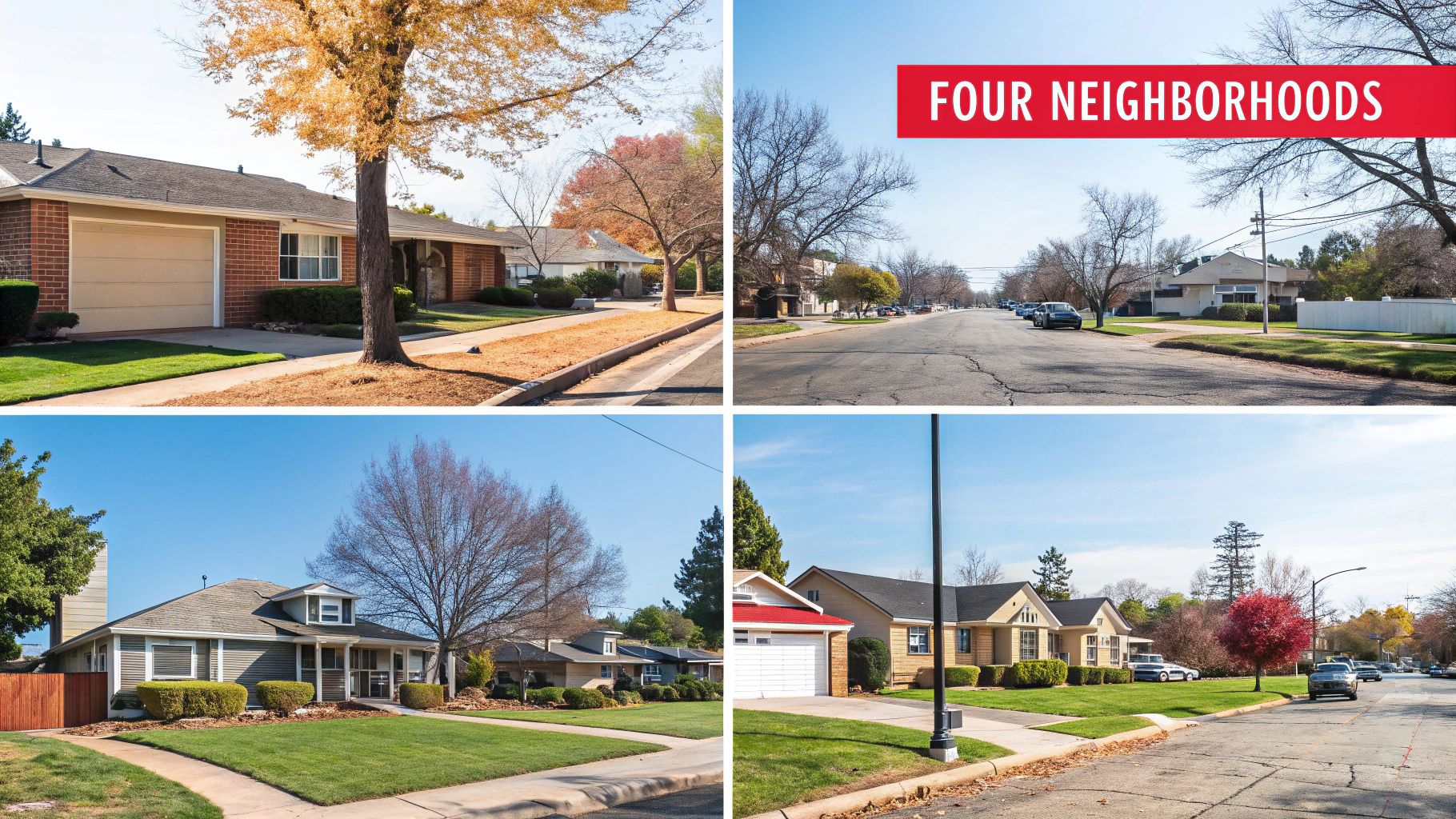
West Park’s enduring appeal comes from a unique blend of features that are hard to find elsewhere in Cleveland. For homeowners, these qualities not only enhance your daily life but also contribute to the long-term stability of your property's value.
A. Suburban Feel Inside the City
This is West Park's defining characteristic. With its quiet, tree-lined streets, sidewalks perfect for evening strolls, and a strong sense of residential stability, it offers a suburban lifestyle without the long commute. You get the peace and space of the suburbs with all the benefits of a Cleveland address.
B. Metroparks Access
Direct access to the Cleveland Metroparks is a major draw. The stunning Rocky River Reservation and Big Creek Parkway are practically in your backyard, offering endless opportunities for hiking, cycling, fishing, and family picnics. This connection to nature is a priceless asset for residents.
C. Community Identity
West Park isn't just a place to live; it's a community. This is evident in its strong civic engagement, active block clubs, and the sheer number of long-term residents who take immense pride in their homes and neighborhood. People here know their neighbors and look out for one another.
D. Schools and Family Appeal
For generations, West Park has been a go-to neighborhood for families. Its reputation for safety and quiet streets makes it an ideal place to raise children. While part of the Cleveland Metropolitan School District, it is also conveniently located near some of the West Side's strongest private and charter school options, including St. Joseph Academy and St. Edward High School.
E. Central Location
Convenience is key. West Park is just minutes from Cleveland Hopkins International Airport and offers quick access to major highways like I-71, I-90, and I-480. A drive to downtown Cleveland typically takes only 15 minutes, making it a practical location for commuters. This blend of accessibility and tranquility is why West Park remains one of Cleveland’s most livable and desirable neighborhoods. It’s also a key reason it consistently ranks among the top 10 Cleveland neighborhoods for families.
Things to Do in West Park
Living in West Park means you have a great mix of outdoor recreation, local dining, and community events right at your doorstep. It’s a neighborhood that balances quiet residential life with convenient access to amenities.
- Explore the Rocky River Reservation: Spend a day hiking the trails, having a picnic, or letting the kids play at one of the many scenic spots.
- Visit Kamm’s Plaza: This local hub offers a variety of shops and casual dining options, making it a convenient spot for everyday errands.
- Dine on Lorain Avenue: Discover local favorites, from classic Irish pubs to family-owned restaurants serving up delicious, unpretentious food.
- Enjoy Neighborhood Parks: Take the kids to the playground at Jefferson Park or Gunning Park, which also features a popular public pool and recreation center.
- Golf at Big Met: Hit the links at the Big Met Golf Course, one of the most popular and historic courses in the Metroparks system.
- Attend Community Events: From the annual Hooley™ on Kamm's Corner to local parades and craft fairs, there’s always something happening that brings the community together.
- Stay Active: West Park offers numerous fitness centers, libraries, and community spaces that host events and activities for all ages.
The lifestyle in West Park perfectly blends suburban convenience, affordability, and a deep connection to Cleveland’s incredible green spaces.
Housing and Architecture in West Park
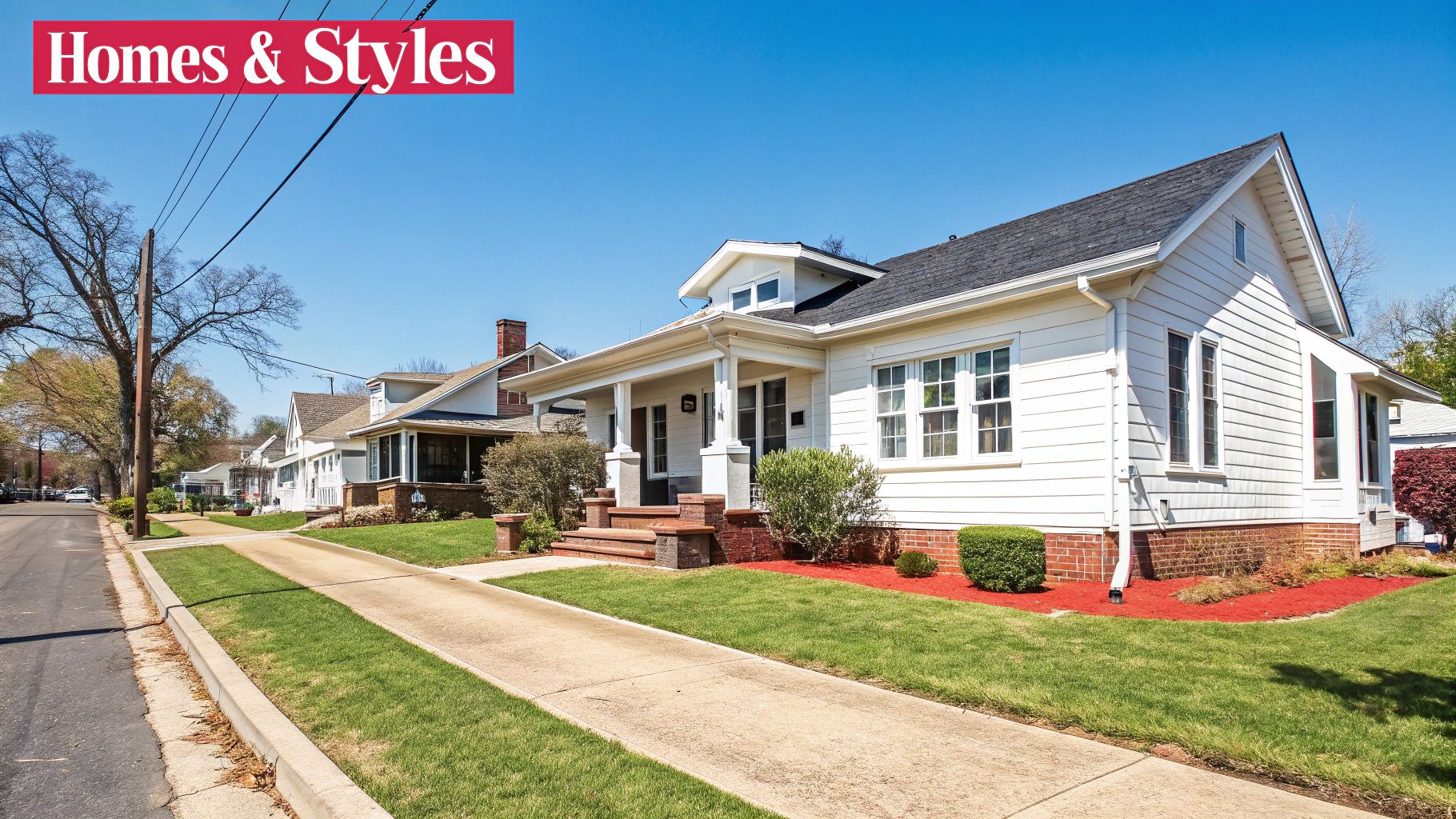
The homes in West Park tell the story of its growth, offering a living timeline of 20th-century American architecture. For homeowners, understanding these styles is key to recognizing both the charm and the challenges inherent in your property.
A. 1920s and 1930s Colonial Homes
Found predominantly around Kamm’s Corner, these stately homes feature classic brick or siding exteriors, traditional layouts with formal living and dining rooms, original hardwood floors, and large, sturdy basements. They represent timeless quality and are highly desired by buyers seeking character and space.
B. 1940s to 1950s Bungalows and Cape Cod Homes
These homes are the backbone of West Park, especially in the Jefferson and Bellaire-Puritas areas. Built during the post-WWII boom, they were designed for growing families. Today, their affordability and straightforward layouts make them a popular choice for first-time homebuyers and those looking for a manageable renovation project.
C. 1950s and 1960s Ranch Homes
As single-floor living gained popularity, ranch homes became a fixture in West Park. Often situated on larger lots, these properties are particularly attractive to downsizers and retirees who want to avoid stairs and enjoy easier maintenance while staying in the neighborhood they love.
D. Multifamily and Doubles
West Park also offers solid opportunities for real estate investors. Doubles and smaller multifamily properties are common, especially in Jefferson and Bellaire-Puritas. These are ideal for generating rental income in a stable, high-demand area.
E. Infill New Construction
While limited, there is a growing trend of new construction homes being built on available lots. These modern homes offer an alternative for buyers who want to be in West Park but prefer new amenities.
Common Repair Issues West Park Sellers Face
While the historic charm is a major draw, it comes with a reality check. The age of West Park's housing stock means many properties face similar maintenance challenges. As a homeowner considering selling, these are the issues that often come up during a home inspection and can complicate a traditional sale.
- Original Plumbing Systems: Galvanized or cast-iron pipes are prone to corrosion and leaks.
- Roof Aging: Many roofs are nearing the end of their 20-25 year lifespan.
- Electrical Panels Needing Upgrades: Outdated 60-amp panels or knob-and-tube wiring are a safety concern and a major expense to replace.
- Furnace and AC Nearing End of Life: HVAC systems over 15-20 years old are a red flag for buyers.
- Foundation Cracks: Minor settling and cracks are common and can lead to water issues.
- Sewer Line Wear: Original clay sewer lines can be damaged by tree roots, requiring costly repairs.
- Drafty Windows and Insulation Gaps: Original windows and poor insulation lead to high energy bills.
- Cosmetic Outdatedness: Wood paneling, old tile, and dated cabinetry can deter buyers looking for move-in-ready homes.
Facing a list like this can feel overwhelming. It’s why many West Park homeowners find that listing on the MLS—with its endless negotiations and buyer demands—isn’t the right path for them.
West Park Real Estate Market Overview
The West Park Cleveland real estate market is defined by its stability. Unlike trendier neighborhoods that see dramatic price swings, West Park offers slow, steady, and reliable appreciation. This is driven by its reputation for safety, affordability, and quality of life, making it an attractive alternative to pricier suburbs like Lakewood or Fairview Park. However, for homeowners looking to sell, the market presents unique challenges tied directly to its aging housing stock.
A. Current Price Ranges
Home values in West Park vary significantly by sub-neighborhood, condition, and property type.
- Renovated Colonials: These homes, especially in Kamm’s Corner, command the highest prices.
- Unrenovated Homes: Properties needing significant updates are priced lower to account for renovation costs, attracting investors and DIY buyers.
- Ranches: Popular with downsizers, their value depends heavily on updates and lot size.
- Bungalows: These are the bread-and-butter of the market, with prices fluctuating based on condition.
- Doubles: Investor-focused properties are valued based on rental income potential and condition.
- New Construction: These rare offerings set the top of the market price-per-square-foot.
B. Buyer Types
The buyers interested in West Park are diverse:
- First-Time Buyers: Drawn by affordability and the opportunity to build equity.
- Families: Seeking safe streets, good schools, and more space.
- Investors: Looking for stable, long-term rental properties with consistent demand.
- Relocators: Choosing Cleveland’s west side for its convenience and community feel.
C. Rental Market
The rental market is incredibly strong, particularly in Jefferson and Bellaire-Puritas. Proximity to the airport, highways, and downtown makes West Park a desirable location for tenants, ensuring a steady demand for landlords and buy-and-hold investors.
D. Appreciation Trends
West Park sees consistent but modest value increases. Its market isn’t about rapid gains; it's about long-term stability. Demand is driven by fundamentals like affordability and safety, which protects property values even in fluctuating economic climates.
E. Market Challenges for Sellers
Selling an older home in West Park often comes with hurdles.
- Aging Home Stock: Today’s buyers often expect move-in-ready homes, a high bar for properties built 60+ years ago.
- Inspection Issues: Older electrical, plumbing, and HVAC systems frequently lead to stressful and costly negotiations after an inspection.
- Appraisal Differences: A beautifully renovated home may struggle to appraise if surrounded by un-updated properties, creating financing problems for buyers.
These realities can make a traditional sale feel uncertain. For homeowners who need a more predictable and straightforward process, exploring options like selling your house fast for cash can provide a clear path forward.
Pros and Cons of Living in West Park
Every neighborhood has its strengths and weaknesses. Here’s an honest look at what homeowners and residents experience in West Park.
Pros
- Very Safe and Stable: Known as one of Cleveland's safest areas, with low crime rates and a strong community watch presence.
- Family-Friendly: Quiet streets, good parks, and a welcoming atmosphere make it ideal for raising a family.
- Affordable: Offers more home for your money compared to nearby suburbs like Lakewood or Rocky River.
- Large Yards: Many homes feature generous backyards, a rare find within the city limits.
- Easy Access to Metroparks: The Rocky River Reservation provides incredible opportunities for outdoor recreation.
- Suburban Feel with City Benefits: You get a quiet, residential lifestyle with quick access to downtown Cleveland and other amenities.
Cons
- Homes Require Maintenance: The housing stock is older, meaning ongoing upkeep and potential for major repairs are a reality for homeowners.
- Lower Walkability Outside Main Corridors: While areas like Kamm’s Corner are walkable, most of the neighborhood requires a car for errands. For a different experience, check out the best areas to live in Cleveland if you want walkability.
- Some Traffic Congestion: Main roads like Lorain Avenue and Rocky River Drive can get busy during peak hours.
- Some Sub-Areas More Industrial: Parts of Hopkins and Bellaire-Puritas border industrial zones, which can be less appealing for some buyers.
Who West Park Is Best For
West Park’s unique character makes it an ideal fit for a specific set of residents. It’s a neighborhood that appeals to those who value stability and community over trendy amenities.
West Park is best for:
- Families Seeking Safety and Space: With its quiet streets, good parks, and larger homes, it's a natural choice for families.
- First-Time Buyers Wanting Value: The affordability of bungalows and smaller colonials provides an accessible entry point into homeownership.
- Retirees Wanting Quiet Neighborhoods: The prevalence of ranch homes and a stable community makes it a comfortable place for downsizing.
- Long-Term Residents Who Value Community: It’s a place where people put down roots and stay for decades.
- Investors Seeking Stable Rental Yields: The strong, consistent rental demand makes it a reliable choice for buy-and-hold investors.
What Homeowners Should Know About Selling in West Park
If you're thinking about selling your home in West Park, it's important to understand what today's buyers are looking for and the hurdles you're likely to face. The market has changed, and buyers' expectations are higher than ever.
Buyers today often expect updated kitchens and bathrooms, as well as newer roofs and HVAC systems. An older home, even one that's been well-maintained, can struggle to compete with fully renovated properties without significant price adjustments. Inspection findings are often the biggest challenge, turning what seems like a smooth sale into a stressful negotiation.
Homes in the desirable Kamm’s Corner area tend to sell the fastest, while properties in Hopkins and Bellaire-Puritas can take longer, depending heavily on their condition.
Common Buyer Repair Requests
When selling a classic West Park home on the traditional market, be prepared for buyers to request repairs or credits for common issues, such as:
- Electrical Upgrades: Replacing old panels or knob-and-tube wiring.
- Sewer Scope Repairs: Addressing root intrusion in original clay sewer lines.
- Furnace or Roof Replacement: If either is near the end of its functional life.
- Waterproofing Basements: A frequent request due to the age of the foundations.
- Cosmetic Upgrades: While not a structural issue, outdated kitchens and bathrooms can be a major sticking point for buyers.
Dealing with these demands costs time and money, adding stress to an already complex process. For a deeper dive into navigating a sale, check out our guide on How to Sell Your House Fast in Cleveland.
When Selling As-Is Makes More Sense in West Park
For many West Park homeowners, the traditional sales process just isn't a good fit. The thought of spending thousands of dollars on repairs, dealing with contractors, and enduring endless showings is simply overwhelming. This is particularly true if you're facing a stressful situation like a job relocation, divorce, or managing an inherited property from out of town.
Selling your home "as-is" to a cash buyer like Home Sweet Home Offers provides a clear, simple alternative. It puts you back in control.
You may want to consider an as-is cash sale if your home:
- Needs Major Repairs: The furnace or roof is at the end of its life.
- Has Plumbing or Electrical Issues: It requires a costly and complex overhaul.
- Has Basement Water Problems: A persistent issue that you don't have the funds to fix properly.
- Is Cosmetically Outdated: The kitchen and bathrooms haven't been updated in decades.
- Is an Inherited or Estate Home: You need to settle an estate quickly and don't want the burden of repairs.
- Is a Long-Term Rental: The property is tired and needs a full turnover you can't manage.
When you sell your house as-is in West Park, you skip the repairs, the showings, and the uncertainty. We buy houses in their current condition, allowing you to move on with your life without the hassle.
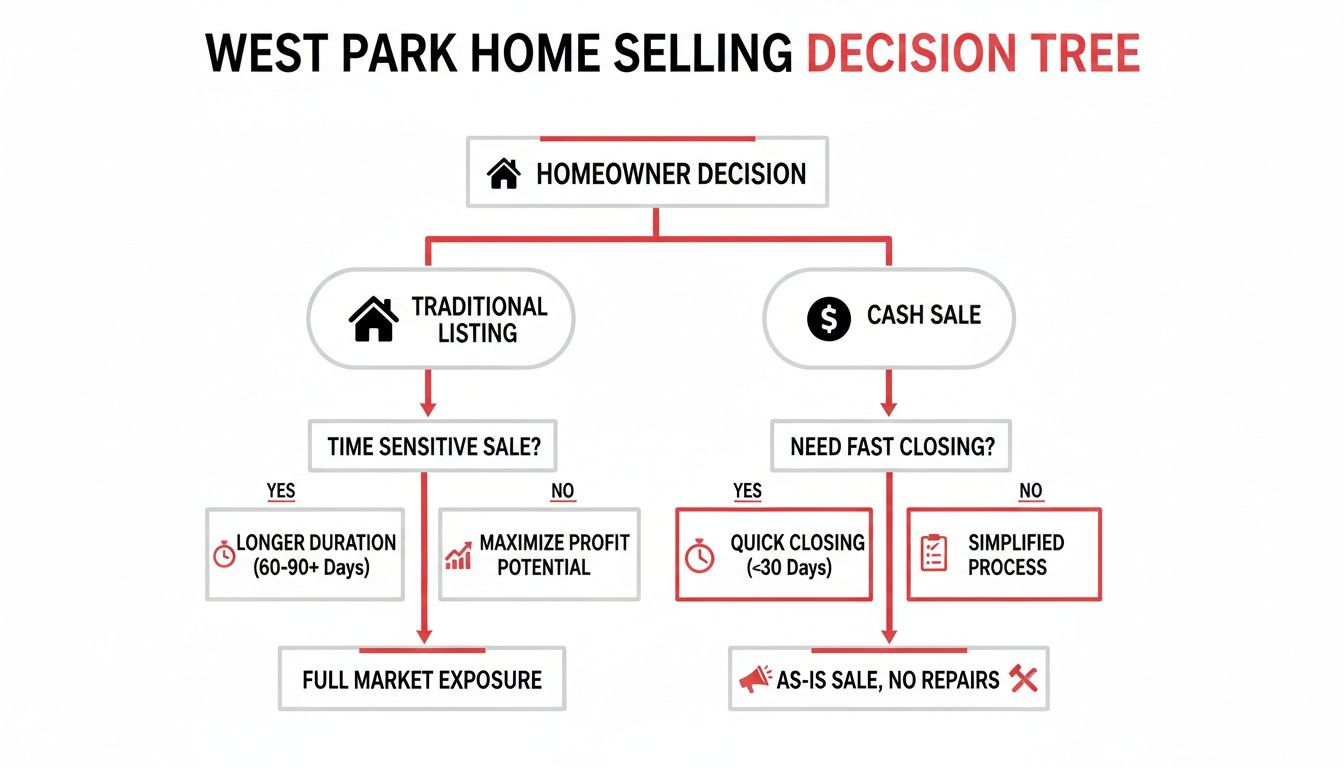
If you're facing any of these challenges, a cash offer can provide the certainty and speed you need.
Get a fast, free as-is cash offer for your West Park home by calling 216-200-8010.
Fun Facts About West Park
- Last to Join: West Park was the very last independent village to be annexed by the City of Cleveland in 1923.
- Strong Irish Heritage: The neighborhood is famous for its Irish heritage, celebrated with festivals, parades, and numerous Irish pubs, especially in Kamm's Corner.
- Green Space Galore: It boasts one of the largest access points to the Cleveland Metroparks within the city limits.
- Community Pillars: West Park is home to some of Cleveland's most well-known churches and community organizations, many of which have been active for nearly a century.
Frequently Asked Questions (FAQ)
What are the safest parts of West Park?
Kamm’s Corner and Jefferson are widely regarded as the safest and most stable areas, known for their active community involvement and strong neighborhood watch programs.
Is West Park affordable?
Yes, West Park remains one of the more affordable neighborhoods on Cleveland's west side, especially when compared to nearby suburbs like Lakewood and Rocky River. It offers excellent value for families and first-time buyers.
What types of homes are common?
The housing stock is dominated by post-WWII construction, including charming bungalows, Cape Cods, and classic brick colonials. You will also find a good number of single-story ranch homes.
How long do homes take to sell in West Park?
A move-in-ready home in a desirable location can sell in 30-60 days. However, properties that require significant updates or repairs can sit on the market much longer, often attracting only investors.
Can I sell my house as-is in West Park?
Absolutely. Selling "as-is" is a very common and practical option in West Park due to the age of the housing stock. Companies like Home Sweet Home Offers specialize in buying houses in their current condition, providing a fast and hassle-free alternative to a traditional sale. We are trusted cash home buyers in West Park who understand the local market.
Is West Park good for families?
Yes, it is one of the most popular neighborhoods in Cleveland for families due to its reputation for safety, quiet streets, access to parks, and strong community feel.
What is the difference between Kamm’s Corner and Jefferson?
Kamm’s Corner is the commercial and social hub of West Park, with more shops, restaurants, and a livelier, walkable atmosphere. Jefferson is more traditionally residential, with quieter streets and a greater focus on single-family living.
Your Partner in Selling Your West Park Home
West Park is undeniably one of Cleveland’s most livable and beloved neighborhoods. Its beautiful homes, incredible parks, and authentic suburban feel make it a wonderful place to live. However, we understand that the very age that gives our homes character can also create significant challenges when it’s time to sell.
For many homeowners, the traditional route of listing a home—with its costly repairs, endless showings, and uncertain timelines—simply isn't the right choice. You have options. At Home Sweet Home Offers, we provide a simple, transparent, and stress-free solution.
Thinking of selling in West Park? Home Sweet Home Offers buys houses as-is in all West Park sub-neighborhoods, including Kamm’s Corner, Jefferson, Bellaire-Puritas, and Hopkins. Call 216-200-8010 for a free, no-obligation cash offer and discover a better way to sell your home.
Sources
- City of Cleveland
- Cleveland Historical
- Cleveland Landmarks Commission
- Multiple Listing Service (MLS) and Real Estate Board Data
- Cleveland Metroparks